Some dental problems are apparent long before a puppy or kitten has a full set of adult teeth. A jaw that is growing unevenly, teeth erupting into the wrong position, a cleft palate, extra or missing teeth, or an adult tooth that never erupts can affect much more than how a young pet's smile looks. A poorly positioned tooth may strike the palate every time the mouth closes, an unerupted tooth can form a cyst that damages the surrounding jaw, and abnormalities of the palate can interfere with eating and allow food or liquid into the nasal passages. Because the teeth and jaws are still developing, these are problems where timing matters. Your primary veterinarian may recommend seeing a veterinary dental specialist early so we can determine what is happening beneath the gumline and whether intervention now could prevent pain or more complicated problems later.
At North Bay Veterinary Dentistry in Petaluma, a boarded dental specialist evaluates developmental and congenital dental problems in puppies and kittens referred to us for more advanced care. Full-mouth dental X-rays and cone beam CT imaging allow us to evaluate unerupted or missing teeth, abnormal roots, jaw development, and other structures that cannot be assessed from the visible teeth alone. We also treat bites that do not line up, including teeth that are causing painful contact with the palate or other soft tissues, with function and comfort rather than cosmetics as the goal. If your veterinarian has found an unusual bite, abnormal tooth development, or another concern with your puppy or kitten's developing mouth, request a consultation so we can determine what, if anything, needs to be addressed and when.
Young Mouths: The Key Points
- Puppies and kittens trade a full set of baby teeth for a permanent set by roughly six or seven months, and most of what goes wrong shows up during that handoff.
- A baby tooth still standing next to its adult replacement, a bite that doesn't line up, or a gap where a tooth should be all deserve an exam rather than another few months of watching.
- A lower canine stabbing the roof of the mouth, an unerupted tooth quietly forming a cyst, and enamel that never formed properly are all far simpler to treat while the jaws are still growing.
- A "missing" tooth is only missing once an X-ray says so, because a tooth trapped under the gum can damage the jaw without a single outward sign.
What Happens While Your Puppy or Kitten's Teeth Are Coming In?
Two complete sets of teeth arrive in under a year, and nearly everything that goes wrong shows up during the handoff between them.
Most deciduous teeth loosen and fall out on their own between four and seven months of age, and a little blood on a chew toy during that stretch is usually nothing to worry about. What we're watching for is the handoff going wrong: a baby tooth that won't leave, an adult tooth that never arrives, or a jaw growing unevenly underneath it all. Those are the early dental problems that call for an exam instead of another month of waiting.
What Happens if a Baby Tooth Doesn't Fall Out?
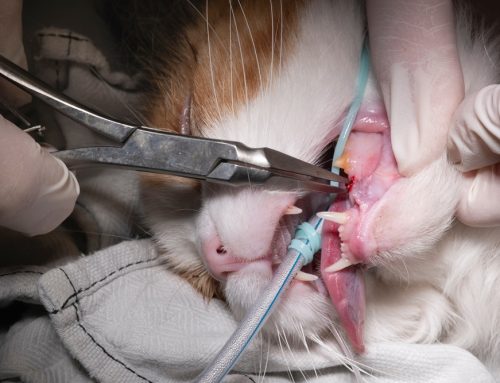
Once an adult canine has erupted beside a baby canine that never loosened, deciduous tooth removal becomes time-sensitive, because the two crowded roots trap food and plaque between them and shove the permanent tooth out of its intended position. Small and toy breeds see this most often, with Yorkshire Terriers, Maltese, Pomeranians, and Chihuahuas near the top of the list, though it happens in cats as well.
Please don't wiggle a stubborn baby tooth loose at home. The root frequently runs two or three times the length of the crown, and a root snapped off below the gum stays behind, hurts, and gets infected. Because so much of the story sits under the gumline, dental X-rays of the roots tell us what we're working with before anything is touched. Two canine teeth sitting side by side where there should be one is reason enough to schedule an evaluation.
What if a Baby Tooth Breaks?
It still matters, even though the tooth is temporary. Deciduous teeth are thin-walled, and a fracture that exposes the pulp is painful now and an open door for infection to reach the root tip, exactly where the permanent tooth bud is developing. "It's going to fall out anyway" is the most expensive sentence in puppy dentistry; the tooth that pays the price is the adult one underneath.
A gray or purple baby tooth tells the same story from inside: a pulp that has died and needs the same attention. Fractured and discolored baby teeth are usually extracted, carefully and with X-rays first, since the fragile roots sit against the developing adult tooth. A broken baby tooth, or a pet suddenly chewing on one side, is worth a look now rather than at the next booster visit.
Which Bites Need a Specialist, and Which Are Breed Normal?
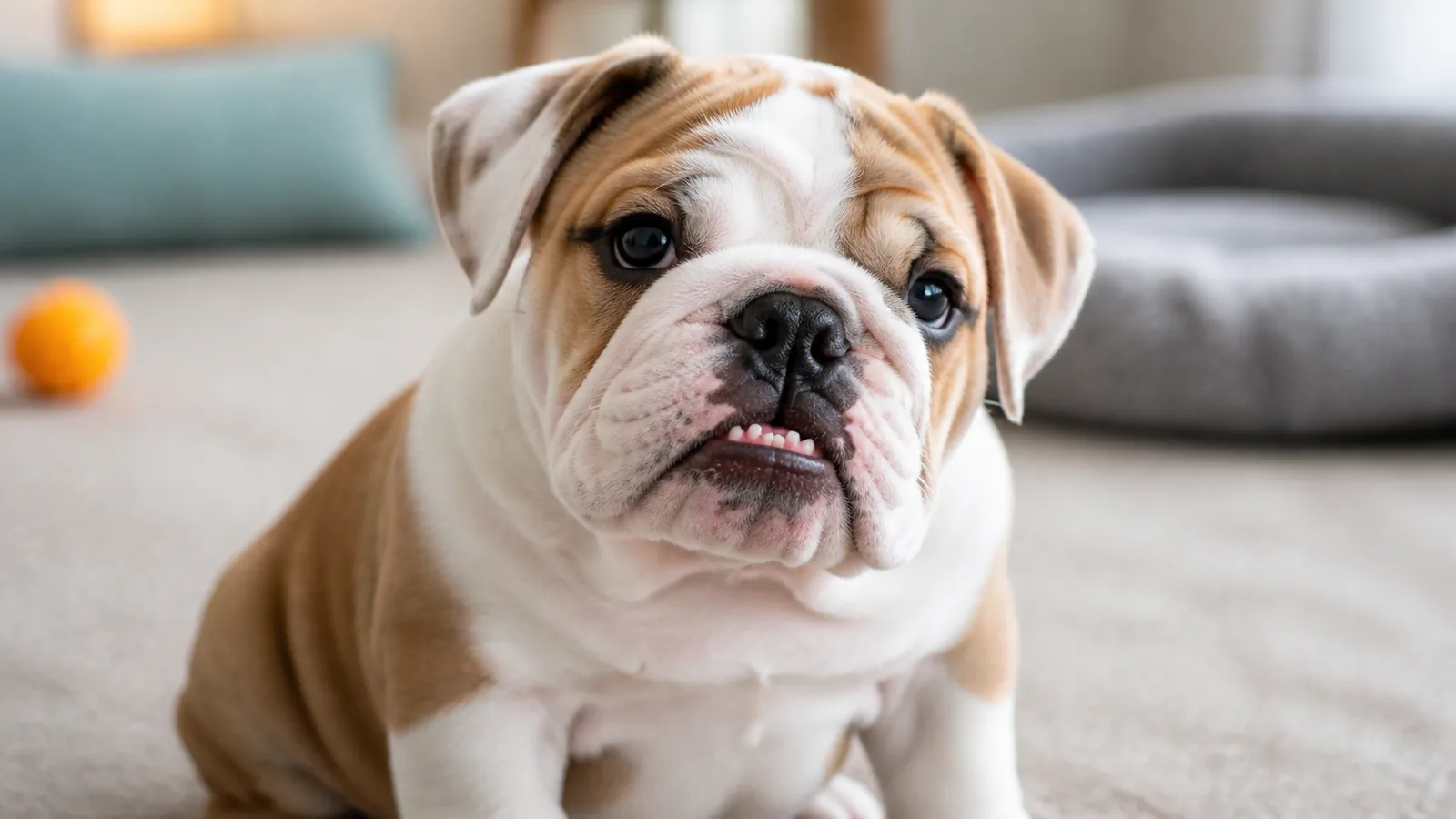
The normal occlusion of a pet's mouth has the upper incisors sitting slightly forward from the lower, with the lower canines sitting just in front of the upper canines. When the bite doesn't line up perfectly, it's known as a malocclusion, and the deciding question is not whether the bite looks perfect but whether a tooth is striking tissue it was never meant to touch. Plenty of bites are simply breed normal. A Boxer's lower jaw is meant to sit forward of the upper one, a Persian's face is short by design, and neither pet is uncomfortable as long as the teeth aren't hitting tissue they aren't meant to touch.
Others do real damage, wearing a pit into the palate or driving a tooth into the gum on the opposite side. When contact like that is happening, orthodontic care aims to move or reshape the offending tooth so the mouth closes without pain, with function as the goal rather than appearance. Bites that aren't hurting anything get watched instead, with rechecks while the jaws finish growing.
The congenital and inherited dental abnormalities behind most bad bites fall into a few patterns:
- Overbite: the lower jaw grows shorter than the upper, so the lower canines and incisors land on the palate instead of in their intended grooves, and over time they can punch painful pits into the roof of the mouth.
- Underbite: breed normal in a Bulldog or a Persian, but in a breed that shouldn't have one, the lower teeth can drive into the upper gums with every bite.
- Wry bite: one side of the jaw grows faster than the other, twisting the midline so the two halves of the mouth no longer match. These are the most complex to plan, because the asymmetry keeps changing while growth continues.
- Base narrow canines: the most common painful bite we treat. The lower canines erupt too upright and too close together, so their tips strike the palate every single time the mouth closes.
- Rotated and misdirected teeth: individual teeth can point the wrong way even when the jaws line up, from crowded, rotated premolars in flat-faced breeds to lance canines, where an upper canine juts forward like a tusk instead of down, a pattern seen in Shetland Sheepdogs and Persians. A misdirected tooth crowds its neighbors, traps debris, and pushes the teeth around it out of position.
How Are Malocclusions Treated?
Every plan starts from the same principle: end the painful contact, timed to the growth still ahead. In a young mouth that often means interceptive orthodontics, extracting baby teeth that are causing the problems, since a deciduous canine caught in the wrong groove can hold a shorter jaw back from catching up. That early release plus rechecks is sometimes the whole plan for an overbite. Adult teeth that still strike tissue are handled tooth by tooth, moved with an incline plane, shortened and sealed to protect the pulp, or extracted. Wry bites get staged plans, since the asymmetry keeps shifting until growth finishes.
Base narrow canines have the widest treatment menu. Once adult canines are in, options include an incline plane or crown shortening with a protective seal, and for select young dogs there's ball therapy, a smooth rubber ball of a carefully chosen size, carried for scheduled stretches of the day to tip the erupting canines outward. Orthodontics disguised as playtime, and some patients correct with nothing more. When moving a tooth isn't practical, extraction ends the pain reliably; a comfortable mouth with one less tooth beats a full set that hurts to close.
What if Your Pet Has Extra Teeth, or Too Few?
Both happen often enough to have names: hyperdontia for extra teeth and hypodontia for missing ones. Extra teeth crowd their neighbors, trap plaque in tight spots the tongue and brush can't reach, and sometimes turn out to be a retained baby tooth impersonating a permanent one, which only an X-ray can settle. A missing tooth sometimes means nothing at all and sometimes means something is stuck below. These are the cases where a board-certified veterinary dentist and imaging that reaches past the gumline change the plan, because the visible mouth gives almost no information about any of them.
Why Is an Unerupted Tooth More Serious Than a Missing One?
An adult tooth that never erupts can sit trapped under the gum and form a dentigerous cyst, a fluid-filled sac that grows around the crown of the impacted tooth and hollows out the jawbone as it expands. The only outward clue may be a smooth spot where a tooth belongs.
Left long enough, a dentigerous cyst can weaken the jaw toward fracture and damage the roots of healthy neighboring teeth, turning a one-tooth problem into a four-tooth one. Flat-faced breeds like Boxers, Bulldogs, and Pugs are especially prone to unerupted lower first premolars, which is why their "missing" teeth get extra suspicion. The protective rule is simple: every tooth that hasn't shown up gets an X-ray. Caught early, treatment is usually straightforward, removing the impacted tooth and the cyst lining, or uncovering a tooth that still has a clear path to erupt.
What Is Enamel Hypoplasia?
Enamel hypoplasia means the enamel never formed at full thickness, leaving chalky, pitted, or discolored patches where the softer layer underneath shows through. It happens when illness, high fever, or trauma strikes during the narrow window when permanent tooth enamel is forming, and the result is a disorder of the dental hard tissues that leaves teeth sensitive, quick to stain, and quick to gather plaque.
Certain medications leave their own mark: tetracycline antibiotics given while enamel is forming permanently stain developing teeth, one reason young pets' prescriptions are chosen with unfinished mouths in mind.
These teeth aren't doomed. Smoothing rough edges and bonding sealants over the exposed surfaces protects them and takes the sensitivity away, and the earlier that happens after eruption, the less wear and staining have a chance to accumulate.
What Does a Cleft Lip or Palate Mean for a Puppy or Kitten?
A newborn who dribbles milk from the nose while nursing, gains weight slowly, and develops a wet-sounding cough may have a cleft palate, an opening between the mouth and the nasal cavity that has been there since birth.
A cleft lip, the visible notch in the upper lip, is often more cosmetic than functional. A cleft palate is the one that interferes with safe eating, and repair is surgical, with timing as a balance: the patient needs to be grown enough for anesthesia and delicate tissue work, while every week of waiting risks another round of nasal infection. Until repair, feeding is managed carefully, sometimes by tube, to keep food out of the airway. These cases do best when a specialist is involved early, well before surgery day.
Can a Puppy or Kitten Really Have an Oral Tumor?
Rarely, but yes, and young mouths grow tumors all their own. Odontogenic tumors arise from the tissues that build teeth, and the classic one in a young dog is the odontoma, a benign but disorganized mass of tooth material that expands the jaw and crowds out normal teeth. Benign doesn't mean ignorable, since it keeps growing until removed, and removal is simpler while the mass is small.
Not every young-mouth mass is so polite. Papillary squamous cell carcinoma is a true oral cancer of dogs under a year old, and it does best with early, aggressive removal. On the harmless end, viral papillomas, the cauliflower-like warts young dogs pass around at daycare, usually resolve on their own. The rule covers all three: any growth, swelling, or patch of gum that looks different from its neighbors gets imaged and sampled rather than watched; a young jaw heals beautifully from a small surgery and poorly from a big one.
When the Problem Is the Jaw, Not the Teeth
A few young-pet problems live in the jawbones themselves. Craniomandibular osteomyopathy, seen mostly in West Highland White Terriers and related breeds between three and eight months, lays down extra bone along the jaw and makes opening the mouth painful; it typically burns out as growth finishes, with comfort managed meanwhile. Trauma is the other jaw story, since a fall or a scuffle can fracture a growing jaw or separate the joint between the two halves of a kitten's chin, and repair means protecting the adult tooth buds in the fracture line.
How Do These Problems Get Found in Time?
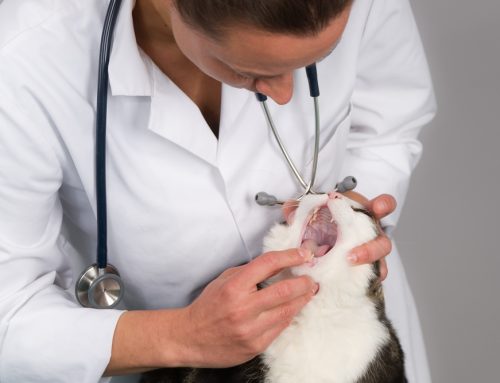
A real oral exam counts teeth one by one and looks for the gaps, the extras, and the firm swelling over a tooth that never came in, because developmental oral abnormalities stay invisible until someone goes looking for them on purpose.
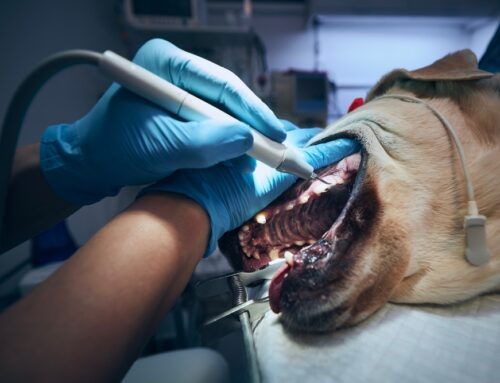
Everything on this page is evaluated and treated under general anesthesia, because probing, full-mouth imaging, and precise work inside a small growing mouth can't happen on an awake patient. Anesthesia safety begins before the procedure with screening and a plan built for the individual patient, continues with monitoring from induction through recovery, and age alone is rarely the barrier families fear it is.
Questions We Hear About Developing Mouths
Will my puppy's bad bite correct itself with growth?
Sometimes. The upper and lower jaws grow on independent schedules, and mild mismatches can even out on their own, which is exactly why comfortable bites get rechecks rather than intervention. Painful contact is the exception: a canine drilling into the palate doesn't wait politely for growth to catch up, and treating it protects the mouth while the jaws finish developing.
Can a baby tooth problem really damage the adult tooth?
Yes, because the permanent tooth bud sits directly beneath the baby tooth's root. Infection or trauma at a deciduous tooth, including a well-meaning attempt to wiggle one out at home, can injure the enamel forming underneath it, and enamel hypoplasia in one adult tooth sometimes traces back to exactly that. It's one more reason stubborn baby teeth belong in professional hands.
My kitten's breath smells terrible. Is that just kitten breath?
Slightly funky breath during teething is common and passes. Breath that stays bad is not normal in a kitten and deserves a look. Inflamed, angry-red gums in a young cat can point to juvenile gingivitis or early stomatitis, both of which respond far better to early treatment than to waiting. Odor can also come from a retained root, a piece of string or plant material caught between teeth, or an ulcer from a viral infection. Any of those needs an exam rather than a dental treat.
Starting Your Puppy or Kitten Off With a Comfortable Mouth
The first year is the one window where a crowded tooth or a jaw growing unevenly can often be handled simply, and that window usually opens because a primary veterinarian noticed something small and said so out loud. If yours has flagged an unusual bite, a tooth that never appeared, or a baby tooth that overstayed its welcome, North Bay Veterinary Dentistry in Petaluma sees puppies and kittens for exactly that. Reach out with what you're seeing, and we'll tell you plainly whether it needs attention now or a recheck in a few months. Plenty of findings turn out to need nothing at all, and that's a relief worth hearing from someone who looked properly.