Higher Standards
Safe, effective, trusted surgical care
Oral and Maxillofacial Surgery
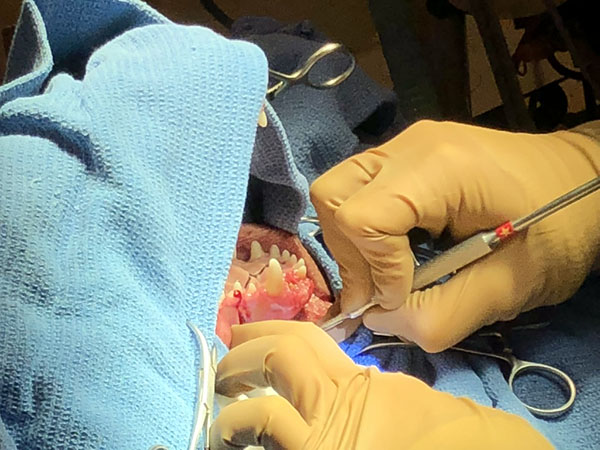
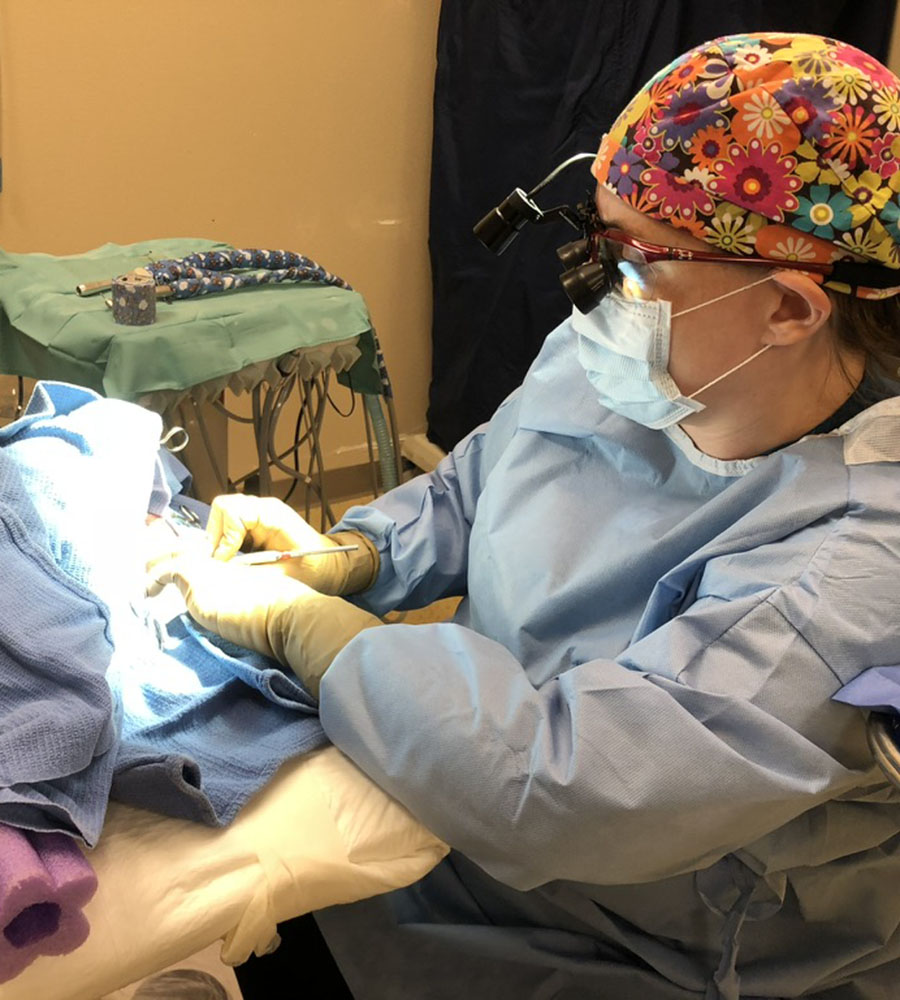
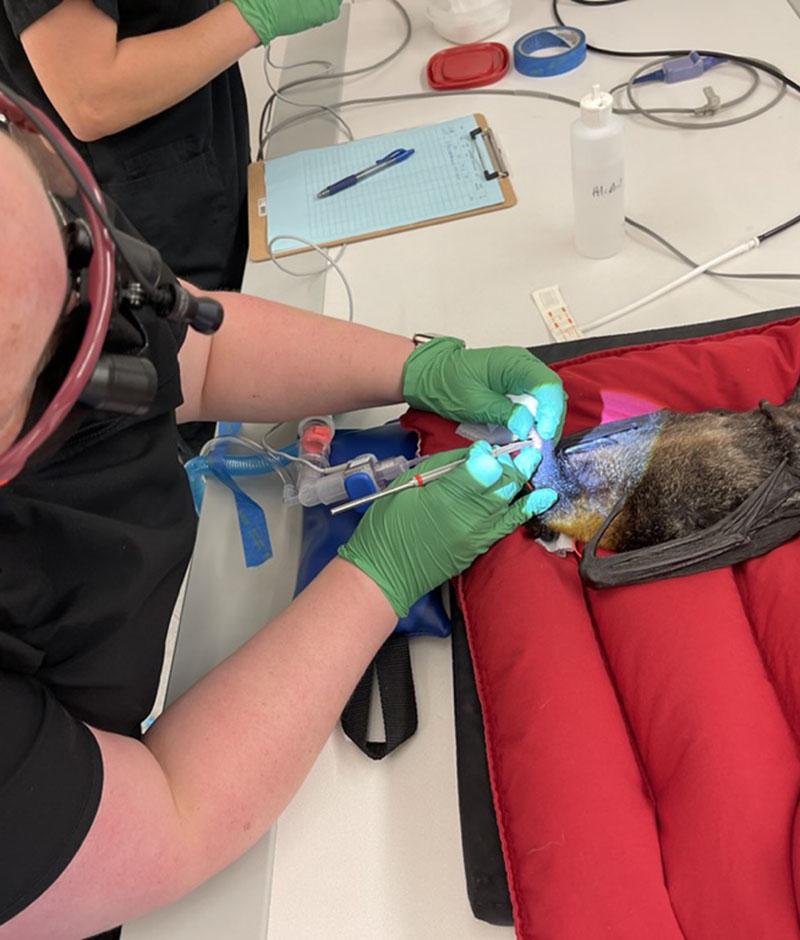
When seeking dental care for your pet–from extraction to jaw tumor surgery–you can be confident your pet is in the best of hands with Dr. Fulton. Our practice prides itself on gentle but swift techniques that allow us to accomplish extensive work in short periods of time. This translates to shorter procedures, a shorter time under anesthesia and hopefully a quick and painless recovery!
Some of the surgical procedures that we offer include:
- Extractions
- both simple single-rooted teeth, as well as complicated extraction of multi-rooted teeth and retained roots
- Oronasal fistula repair
- Gingivectomy or gingivoplasty for gingival hyperplasia
- Treatment of traumatic injuries, including jaw fractures
- Biopsy of small and large lesions
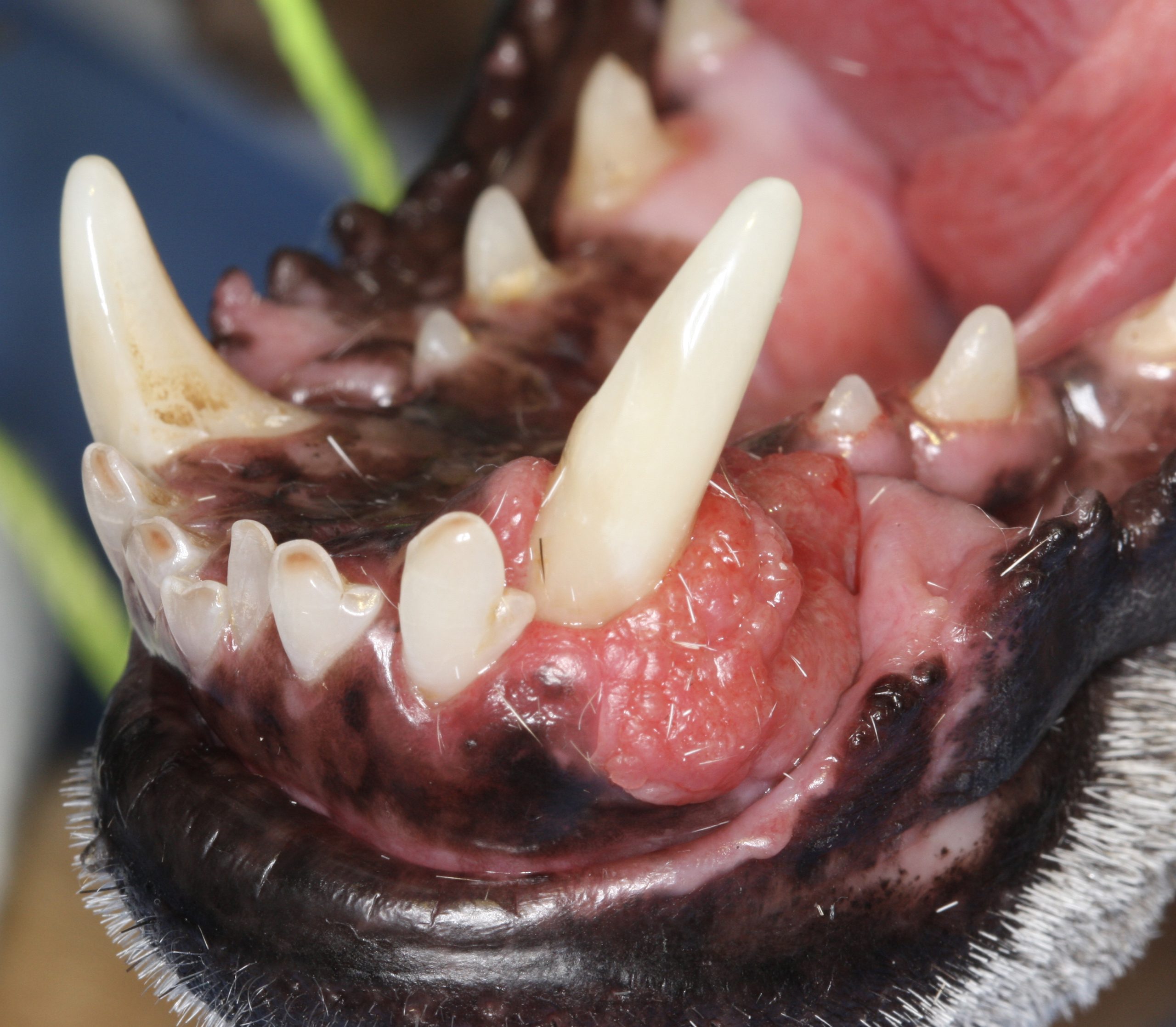
- Removal of cancerous and benign lesions
- Includes both marginal removal as well as full-margin jaw surgery, such as a mandibulectomy or maxillectomy
Initial Consultation
At our initial consultation appointment, we will go over our expectations for what we will accomplish during your pet’s procedure. In many cases, the final recommendations will be made after we have performed imaging and an oral examination under anesthesia. This step helps us determine what is going on with the roots, bone, and soft tissues under the gumline so that we will have a complete picture of what treatment will be needed. Full anesthesia is needed for your pet when we need to work on tough-to-reach spaces.
When it comes to considering extractions, many pet owners are understandably concerned about their pet losing teeth. Dr. Fulton is committed to helping you find the best treatment option for your pet, whether that means performing advanced procedures to try to save a tooth or removing it. If we recommend extracting a tooth or teeth, it is because we believe the procedure is necessary for your pet’s health and comfort.
Each time we extract a tooth we take several steps to make the recovery as smooth as possible:
- We numb the area that is being worked on so the pet can’t feel what we are doing both during the procedure and for 12-24 hours after the surgery.
- We will carefully close every extraction site using dissolvable stitches that fall out on their own.
- We provide detailed instructions on postoperative care, including anti-inflammatory pain medications that help with pain and swelling.
- We schedule recheck appointments at discharge to ensure that healing remains on track.
- Jaw wiring
- Composite splints
- Jaw plating
- Laceration repair
- Maxillomandibular fixation