Pet Orthodontics

A better life for your beloved companion.

Healthy Mouth

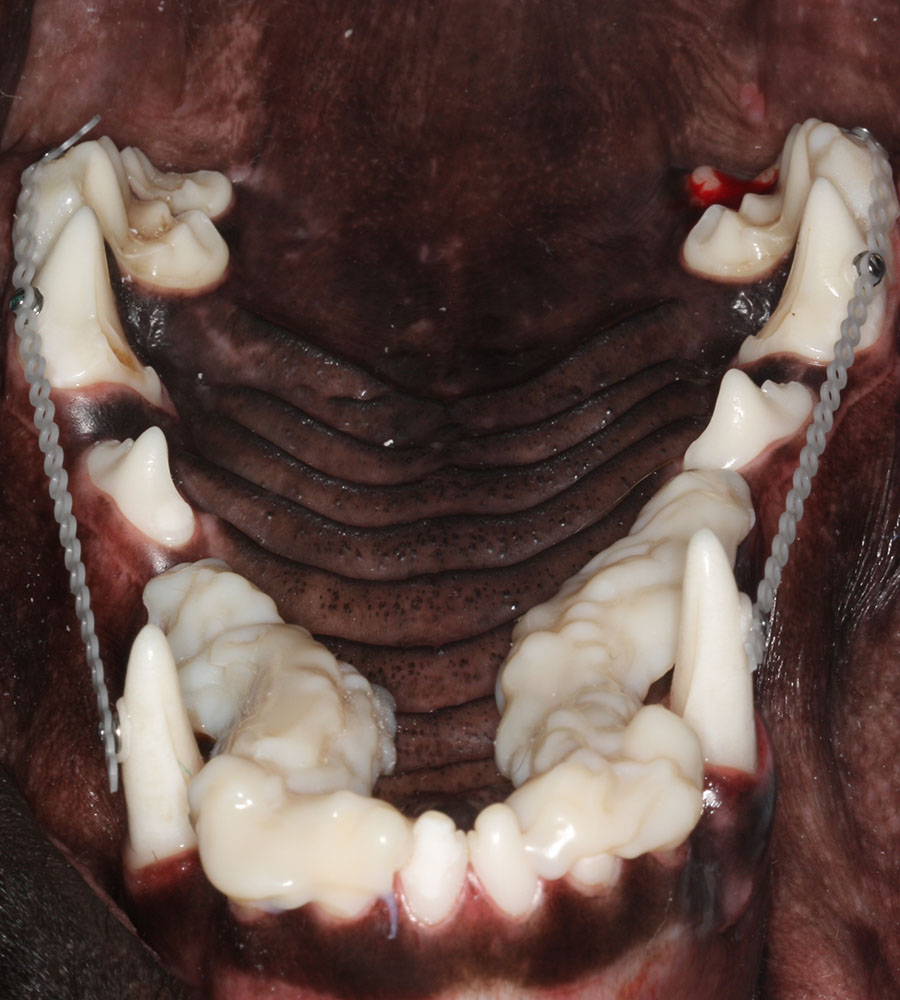
When you think of orthodontics, most people picture metal brackets connected by elastic bands to correct various dental problems, such as a malocclusion (the teeth don’t fit together properly) and crooked teeth. The practice of moving a tooth into a different position in the mouth may sometimes be painful, but the end result can be a prettier smile and a mouth that is healthier and more functional. But why would we fix crooked teeth in a pet?
Why?

The answer is: to make a pet’s mouth healthier and less painful. This is a key difference from human orthodontics—we are not aiming for the perfect smile; we are aiming for the most comfortable smile!

Some malocclusions are harmless and don’t require intervention—a slight underbite (when the teeth don’t come into contact with the bottom jaw) or a slightly crooked tooth. But other malocclusions can lead to a lifetime of pain, infection, and other complications. For instance, a lower canine tooth that is tilted upwards can contact the roof of the mouth, penetrating through the soft tissue and bone and causing an oronasal fistula (a hole into the nasal cavity) if not treated. Malocclusions

Adult Malocclusions If your pet has a problem malocclusion, we can help maintain a healthy mouth by intervening early. Even when your puppy still has baby teeth, it is important to start treatment. Sometimes extracting the problem tooth (or teeth) is the best solution for a puppy as well as for an older dog. For an adult dog’s teeth, we have a variety of treatment options available. There is no one-size-fits-all solution, so we will work with you to come up with the plan that best suits your pet’s condition. Some of the treatments we use include:
  • Odontoplasty and dentinal sealants (lightly blunting the tip of the tooth)
  • Interceptive orthodontics—extracting select teeth
  • Crown amputation with vital pulp treatment
  • Inclined plane and other custom-made retainers or spacers
  • Active-force orthodontics (brackets with elastic bands)
Puppy Malocclusions

The treatment options and course of treatment will be discussed with you at the consultation visit. At this visit, we will provide a detailed estimate for the options available to you and schedule the first step. It is important to note that we will not treat animals for cosmetic reasons only, and we will not adjust a malocclusion in a show pet without documenting that the tooth was treated. If the malocclusion is determined to be a genetic issue, documentation will include verification that the pet will not be used for show or breeding. Our position on this is according to professional ethical standards and is in keeping with the recommendations of the AVMA and AVDC. Consultation Visit