Periodontal Therapy
Treating your pet’s gum disease
Periodontal Health Is Gum Health
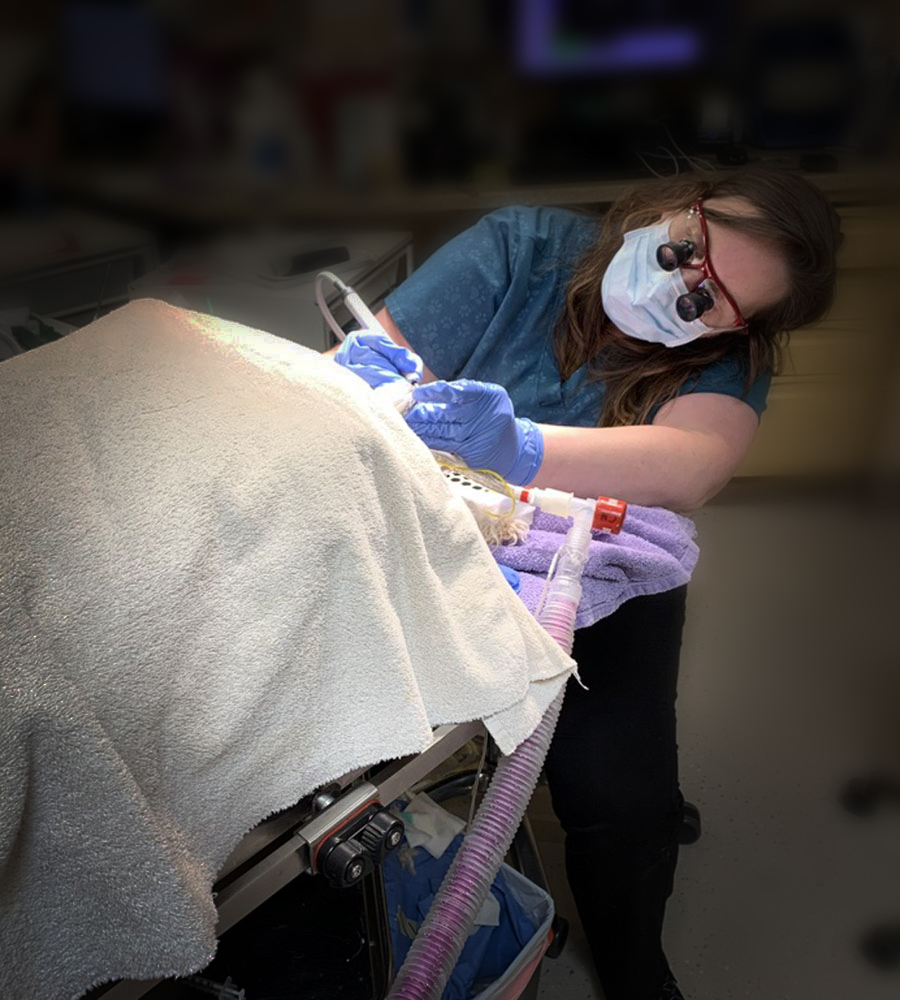
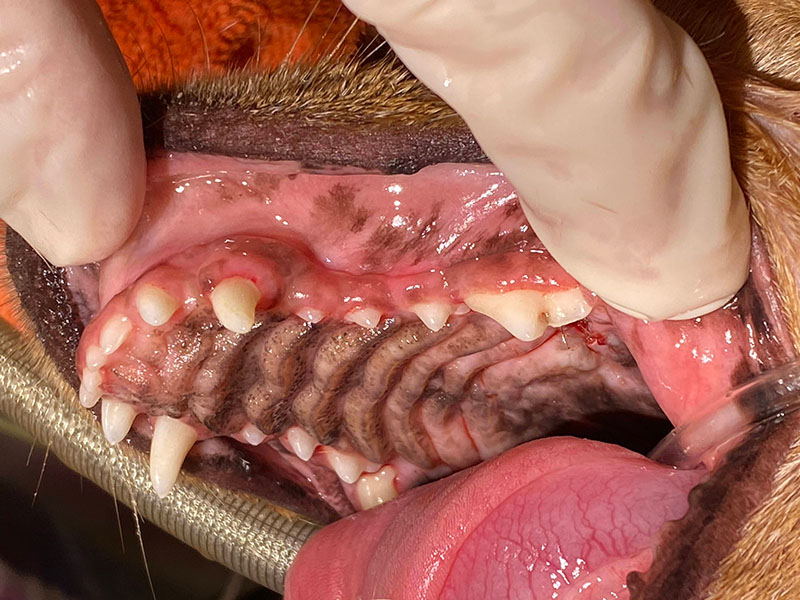
Dogs, cats, and people all have something in common: Gum health impacts our overall health and well-being. Some of us are more prone than others to plaque, calculus, and gingivitis, but we all benefit from clean teeth and healthy gum tissues. As you would expect, prevention is the best medicine, and prevention means keeping the teeth as clean as possible.
Home Care
Prevention at home for dogs and cats includes measures such as daily brushing of the teeth, using dental wipes, water additives, food additives, and chews, and in some cases, following prescription diets**. Every pet is different. They do not all accept the same things, and various measures work better for some than for others.
- Thorough imaging of the teeth as well as the jaws, jaw joints, nose, and ears
- An oral examination to evaluate all the pockets around the teeth
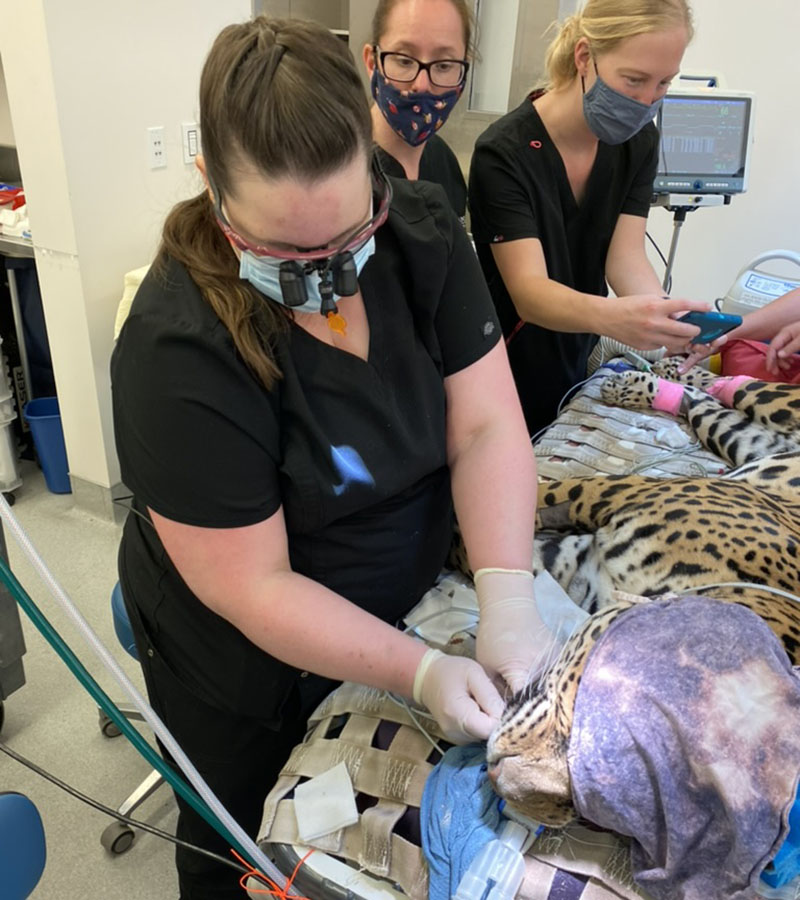
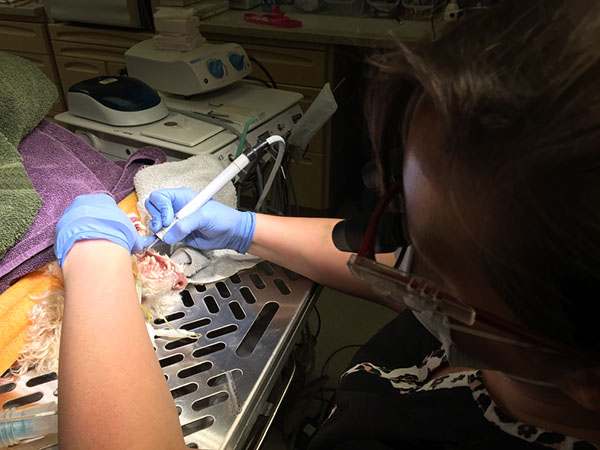
- Ultrasonic cleaning of all the tooth surfaces above and below the gum line
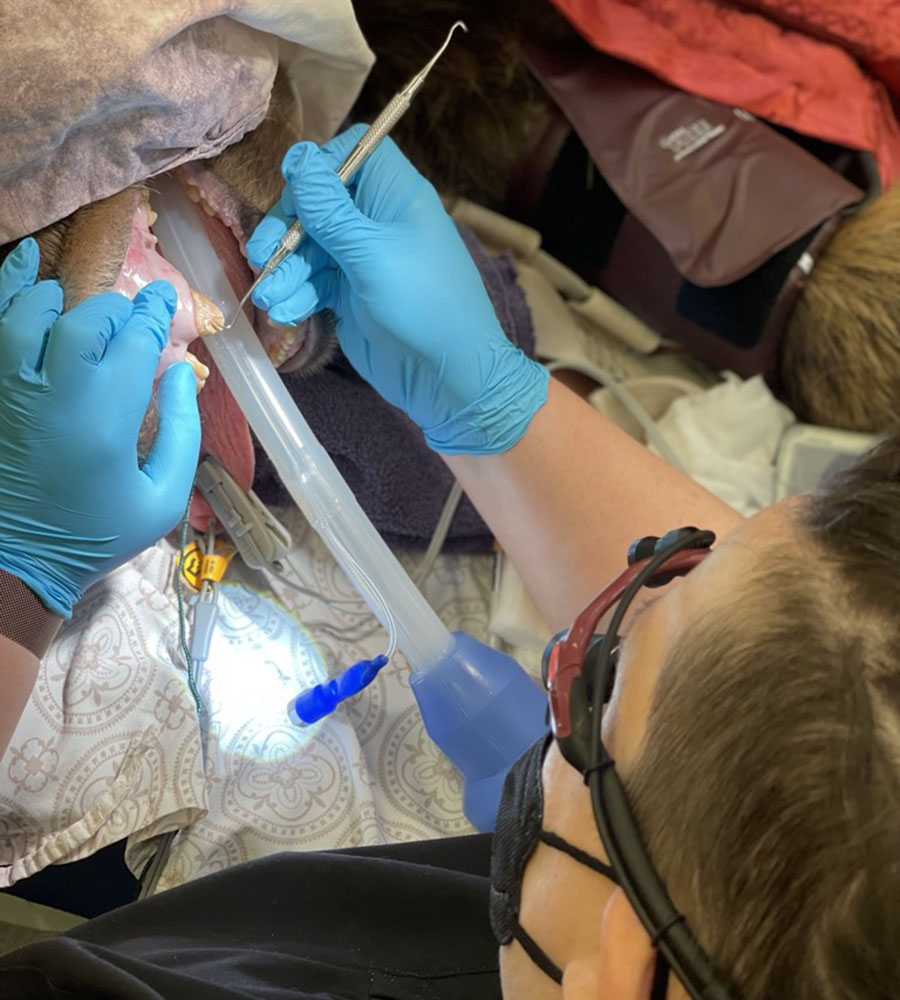
- Detailed cleaning with hand instruments to remove all traces of tartar
Advanced periodontal therapies include:
- Root planing: Deeper pockets along the root of a tooth are carefully and completely cleaned of all diseased tissue and debris.
- Perioceutics: An antibiotic is placed directly into a pocket to continue treating gum disease after your pet leaves the office.
- Guided tissue regeneration and periodontal flap surgery: An advanced surgical procedure that opens up a flap to better access a periodontal pocket in order to clean it out. Bone graft material is then placed to regrow the bone that has been lost.