Pet Prosthodontics

Crowns aka Caps

Prosthodontic Crown

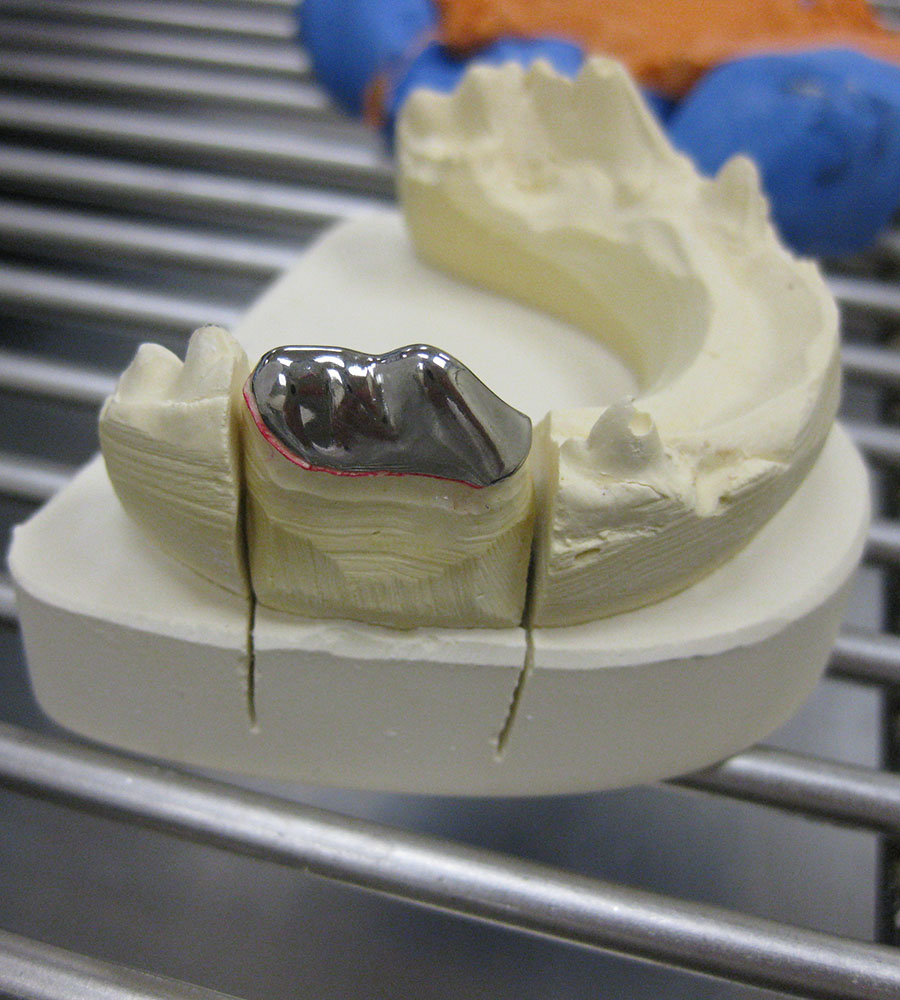
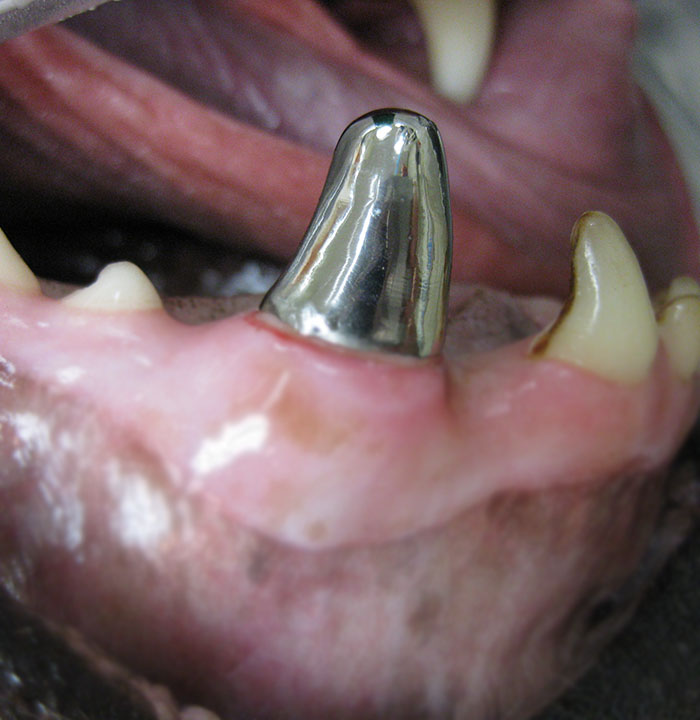
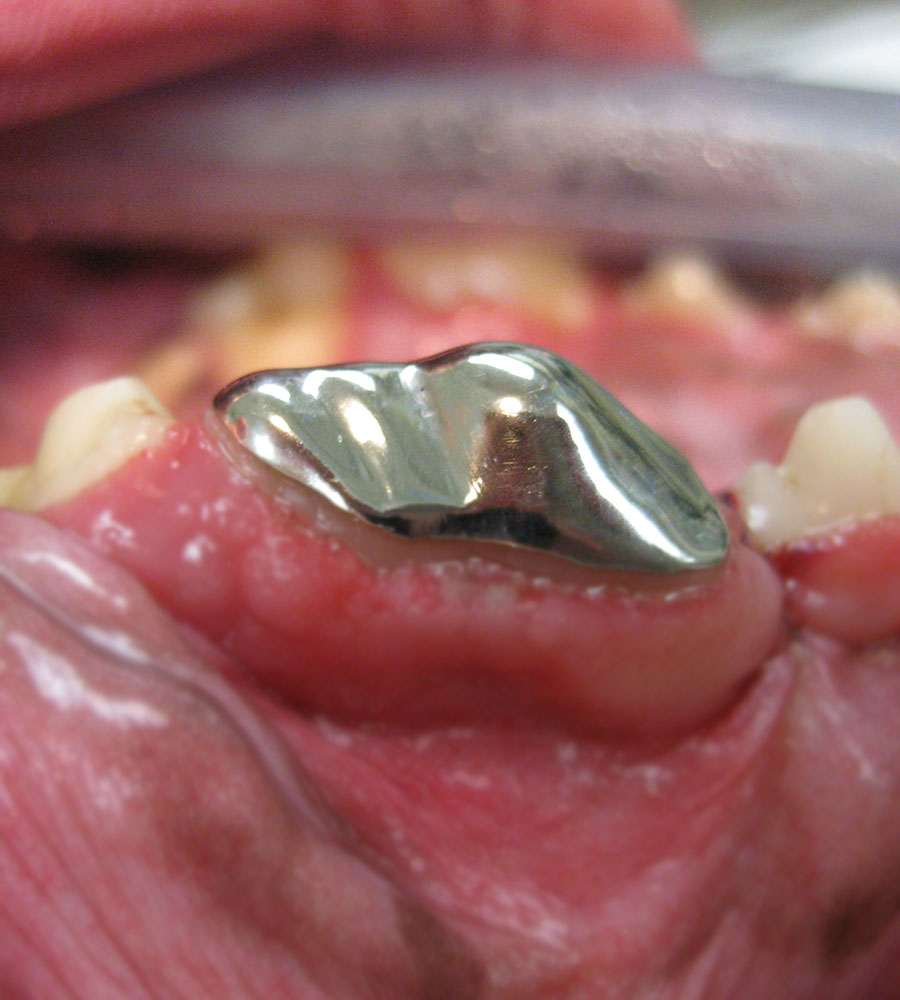
In veterinary dentistry, there are specific situations in which we might consider placing a metal cap (or prosthodontic crown) on a tooth. Because dogs’ teeth are subjected to much higher forces than our teeth, materials other than metal are not recommended because they don’t withstand the wear. If we recommend a crown for your pet’s tooth, it will be a metal alloy crown.
Treatments

Some of the situations in which a crown might be needed include:

  • A broken tooth on a police dog
  • A tooth that has had root canal treatment where the fracture line extends under the gumline
  • A tooth that has had root canal treatment and has been rebroken by the pet
  • Significant wear on the back of the canine teeth from cage chewing
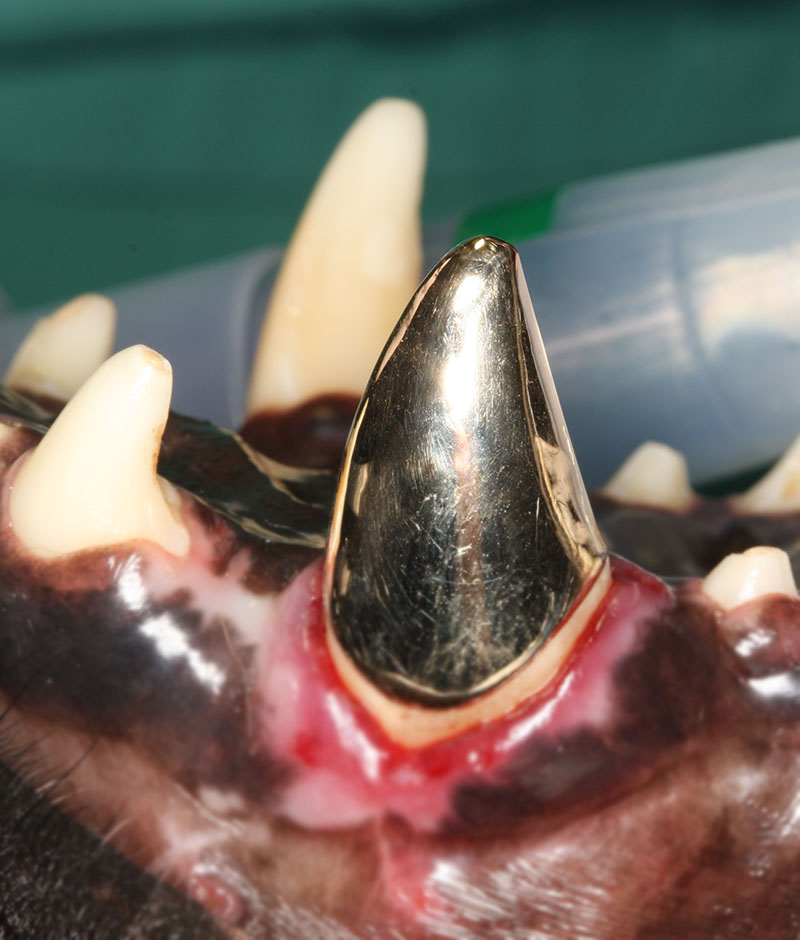
Crowns are made and placed in two separate steps that occur about 2 weeks apart. The first step is to prepare the tooth and take the detailed impressions needed for a dental lab to create the perfect fit. The second step is to cement the newly made crown to the tooth. Both steps necessarily occur under anesthesia, with the second step normally being a very quick procedure. 2 Step Process

Preparing the tooth for the crown involves removing the outer layer of enamel so that when the crown is placed, the teeth still fit together. This causes the tooth to be weakened during the 2-week interval between steps. It is very important that your pet not be allowed to chew on anything that might break the tooth during this time frame. Once the crown is placed, the tooth should be back to normal function by the end of the day. The new crown protects the surface of the tooth from further breakage, though this does not give the pet unlimited freedom to chew on very hard objects. Chew toys and treats should still follow the rule of thumb- if you cannot indent it with a fingernail then they shouldn’t chew on it! What To Expect