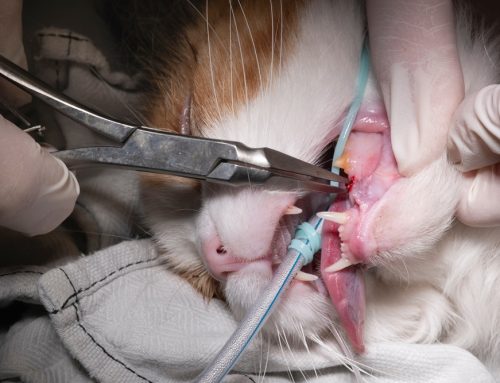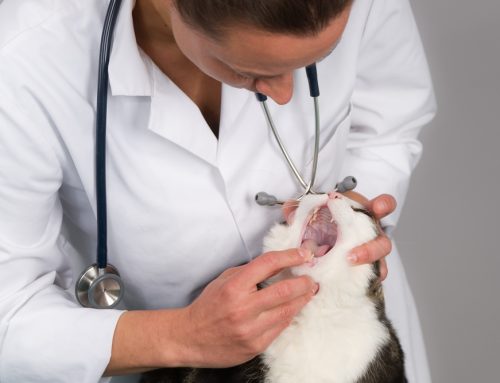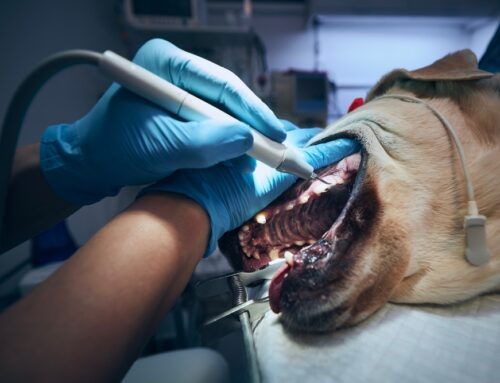

A fractured tooth in a young pet almost always needs treatment, but the right treatment depends on which tooth broke. A broken baby tooth usually comes out, root and all, because its walls are too thin to repair and its root is already dissolving on schedule. A broken adult tooth in a dog or cat under about a year old is a different story. That tooth is still finishing its root, and when we see it quickly, we can often keep the nerve alive so the tooth goes on growing stronger. Either way, a break that opens the pulp, the nerve and blood supply inside the tooth, hurts and gives bacteria a straight path to the root.
A broken tooth in a puppy or kitten often deserves a specialist's look, and North Bay Veterinary Dentistry in Petaluma is built entirely around this kind of medicine. When a young adult tooth breaks, the window to save its living pulp is short, and that kind of endodontic treatment is exactly what a boarded dental specialist trains for. What decides the outcome sits below the gumline, so we take full-mouth dental X-rays and cone beam 3D images under general anesthesia to see the fracture, the root, and anything still developing underneath. If you can see a chip or a break in your young pet's mouth, schedule a consultation and we will walk you through what happens next.
The Young-Tooth Fracture Basics
- A broken baby tooth is almost always removed whole, root and all, because it can't be repaired and the adult tooth is forming right beneath it.
- A broken adult tooth in a pet under about a year old can often be saved with vital pulp therapy, which keeps the nerve alive so the root can finish growing.
- Speed matters most with young adult teeth, because the chance of saving the pulp drops quickly in the days after the break.
- Most fractures come from something harder than the tooth, so the chews you hand a young pet protect both baby teeth and brand-new adult ones.
Is My Puppy's or Kitten's Broken Tooth a Baby Tooth or an Adult Tooth?
Age is the quickest clue. Before about four months, every tooth in a puppy or kitten's mouth is a baby tooth. Between four and seven months, the two sets overlap, and a broken canine could be either one. After seven months, the teeth are permanent, but most are still finishing their roots, and that changes how a fracture is treated.
| Stage | Puppies | Kittens |
| Baby teeth erupt | About 2 to 6 weeks | About 2 to 6 weeks |
| Shedding starts | Around 4 months, incisors first | Around 4 months, incisors first |
| Adult canines arrive | Roughly 5 to 6 months | Roughly 5 to 6 months |
| Permanent set complete | 42 teeth by 6 to 7 months | 30 teeth by 6 to 7 months |
| Adult root tips close | Usually within the first year | Usually within the first year |
That last row is the one most families never hear about. A new permanent tooth arrives looking finished, but inside it is mostly pulp, wrapped in thin walls of dentin (the layer under the enamel), with a root tip still wide open at the bottom. Over the following months, the living pulp lays down more dentin and the walls thicken. That's why the first year is the window for catching oral problems early, and full-mouth dental radiographs settle the baby-or-adult question at a glance, along with any retained root or missing tooth bud hiding below the gumline.
What Are the Signs of a Fractured Tooth in a Puppy or Kitten?
The first sign is often a canine that looks shorter or squarer than its partner. The canine tooth, those longer “fangs” in the front, are easy to break before they have their strong adult enamel. Chewing on one side, dropping kibble, pawing at the face, or pulling away when you touch the muzzle are the everyday signs of a chipped tooth in puppies, and kittens show many of the same habits, usually well before anyone spots the break. Blood on a toy, a sudden preference for the softest food in the house, or new drool all count too.
| What you see | What it usually means | What it needs |
| A chip in the enamel with no pink or dark center | Pulp is probably still sealed | X-rays to check the pulp and root, and possibly a sealant over a young adult tooth |
| A pink or red dot in the middle of the break | Pulp is freshly exposed | Baby tooth: removal, root and all. Young adult tooth: a call right away, since the pulp may be savable |
| A brown or black spot in the center | An old exposure where the pulp has died, or a sealed patch of protective dentin | X-rays and a careful exam to tell the two apart, then appropriate treatment |
| A tooth broken at or below the gumline | A root fragment is still in the socket | Surgical removal guided by imaging, sometimes a root canal |
| A canine shorter than the one opposite it | A fracture nobody witnessed | A full oral exam and X-rays of both sides, then appropriate treatment |
None of this deserves a wait-and-see week. If something looks wrong in your puppy or kitten's mouth, request a consultation and we'll tell you exactly what we're looking at.
Why Can't a Broken Baby Tooth Just Wait Until It Falls Out?
A broken baby tooth can't wait because shedding may be weeks or months away, and the fracture hurts for every one of them. Meanwhile, bacteria can travel down the open pulp into the jaw, right where the permanent tooth is forming. Waiting trades a simple extraction now for an abscess or a damaged adult tooth later.
Is a Fractured Baby Tooth Painful or Dangerous?
A fractured baby tooth is both, once the break reaches the pulp. With living nerve tissue open to the mouth, the complications of a fractured tooth follow a predictable path from inflammation to pulp death to infection in the bone. A puppy who keeps eating isn't telling you the tooth is fine, because the risks of a broken tooth build quietly while hunger outranks discomfort.
Can a Broken Baby Tooth Damage the Adult Tooth Underneath?
Yes. The permanent tooth bud develops inside a bony crypt just beneath the baby root, separated by a shell thinner than a fingernail. Infection tracking down a fractured baby tooth can disrupt the enamel still forming on that adult crown, leaving it thin, pitted, or stained on the day it appears. Deeper damage can bend the forming root so the tooth never erupts straight.
The root of a baby canine is long, thin, curved, and sitting directly against the unerupted adult tooth. That anatomy makes deciduous tooth extraction a surgical procedure guided by radiographs rather than a quick pull, and a crown snapped off at the gumline leaves the painful half of the tooth behind.
How Is a Fractured Baby Tooth Treated?
Treatment starts with an awake oral exam and an itemized plan, then a single anesthetized visit where dental X-rays show the fracture, the root, and the permanent tooth below before anything is touched. The broken baby tooth then comes out whole, with local nerve blocks and pain medication already on board.
Extraction sounds like the heavy option, and in a young mouth it's the gentle one. A baby tooth root is built to disappear anyway, the socket closes quickly, and the adult tooth carries on without inflammation sitting on top of it. Coming out whole is the part that matters, since retained root fragments are among the most common reasons a general practice sends a young patient our way.
Antibiotics alone never resolve a tooth abscess, because the swelling returns as long as the source is still in the socket. We use them alongside removing the cause, never instead of it.
Anesthesia for young and medically complex patients gets planned rather than assumed, with drug choices, warming, and monitoring matched to a small body that loses heat fast. For higher-risk patients, we also consult a board-certified veterinary anesthesiologist.
Can a Broken Adult Tooth Be Saved in a Young Dog or Cat?
A broken adult tooth in a young dog or cat can often be saved if the pulp is still alive and we see it quickly. A growing tooth needs its living pulp to finish building its root, so the goal is to protect that tissue rather than remove it. Vital pulp therapy does exactly that, and it works best within a day or two of the break.
Why Does a Growing Adult Tooth Need Different Treatment?
A standard root canal removes all of the pulp, cleans the canal, and seals it. That works well in a mature tooth with thick walls and a closed root tip. A tooth that's still developing has thin walls and a wide-open tip, so there's little for a filling to seal against. Take the pulp out too early and the tooth stops maturing for good, leaving a fragile shell that's more likely to break again.
| What matters | Baby tooth | Young adult tooth (first year or so) | Mature adult tooth |
| Inside the tooth | Thin walls, root dissolving on schedule | Large pulp, thin dentin, open root tip | Narrow canal, thick walls, closed root tip |
| Goal after a fracture | Remove the source of pain and infection | Keep the pulp alive so the root finishes growing | Preserve the tooth's structure and function |
| Usual treatment when the pulp is exposed | Extraction, root and all | Vital pulp therapy, ideally within a day or two | Root canal therapy, sometimes followed by a crown |
| Follow-up | Watching the adult tooth erupt | X-rays at about 6 months, then yearly | X-rays at about 6 months, then yearly |
What Happens During Vital Pulp Therapy?
Vital pulp therapy, sometimes called a partial pulpotomy, removes only the contaminated tissue at the surface of the break and leaves the healthy pulp underneath to keep working. It happens in a single anesthetized visit:
- Image the tooth with dental X-rays or cone beam CT to confirm the root is intact and no infection has reached the bone.
- Remove the contaminated layer of pulp right at the fracture site, leaving healthy tissue deeper in the canal.
- Place a medicated dressing over the living pulp that encourages it to wall itself off with a fresh bridge of dentin.
- Seal the tooth with a bonded restoration so bacteria can't leak back in.
- Recheck with X-rays about six months later and then yearly, to confirm the pulp is alive and the root walls are thickening.
We use the same technique on purpose in interceptive orthodontics for young dogs, when a lower canine needs shortening so it stops hitting the roof of the mouth. The difference with a fracture is that the clock started before you got here. Each day the pulp sits exposed, bacteria work deeper, and a tooth that was savable on Monday may not be by the following week.
What If the Pulp Isn't Exposed or Has Already Died?
A shallow break that stops short of the pulp still matters more in a young tooth. Young dentin is thin and full of wide microscopic tubules, tiny channels that run toward the pulp, so bacteria get through more easily. Smoothing the edge and bonding a dentinal sealant over the exposed surface protects the pulp underneath.
When a young adult tooth has been broken for a while, the pulp may already be dead, and the root stops maturing at whatever stage it had reached. A short, thin-walled root makes treatment less predictable, and extraction is sometimes the kinder long-term choice. Other times a tooth with enough root length can still be treated with root canal therapy. We'll show you the imaging, explain what each option realistically offers, and help you choose what fits your pet and your family.
How Do You Keep a Young Pet's Teeth From Breaking?
You keep young teeth from breaking with two habits: controlling what your pet chews, and staying close enough to play that the wrestling doesn't get out of hand. Baby teeth and new adult teeth are both thin-walled, so most breaks come from rough play, a bump to the face, or a chew harder than the tooth.
One rule covers most safe chewing choices: if you can't dent it with a thumbnail, or wouldn't want it dropped on your kneecap, it's too hard for a young tooth. That takes bones, antlers, hooves, and rigid nylon off the list. The rule doesn't relax at seven months, because many adolescent dogs hit their most determined chewing phase right as their new canines are at their thinnest.
Soft rubber, carrot sticks, a supervised rope toy, and a teething toy chilled in the freezer all let a puppy lean into sore gums without meeting anything rigid. For kittens, wand toys, fabric mice, and crinkle balls are fine, while brittle plastic and anything that splinters are not. Size counts too, since a toy small enough to slip behind the back teeth is a choking hazard.
Supervision is the piece that's easiest to skip, because chewing is quiet. A puppy alone with a new chew for twenty minutes can do things to a tooth nobody would have allowed while watching.
When Should You Call Us About Your Puppy or Kitten's Mouth?
Call us about a visible chip, a canine shorter than its partner, blood in the mouth or on a toy, a change in how your pet eats or plays, or new sensitivity around the face. A broken adult tooth in a pet under a year old is especially time-sensitive, because the chance of saving its pulp shrinks each day.
A few things make it worse while you're waiting:
- Don't pull a baby tooth yourself: wiggling a fractured baby tooth snaps the root off below the gum and leaves the painful part behind.
- Don't wait and see on an adult tooth: a fresh break may be savable this week and not next month.
- Skip the medicine cabinet: ibuprofen, naproxen, and acetaminophen poison dogs and cats. One household tablet of acetaminophen can kill a cat.
- Put the hard chews away today: a cracked tooth splits further with use.
We're in the office Monday through Thursday. Reach out with what you're seeing and when it started, and we'll help you sort out how soon your pet needs to be seen. If a break happens late in the week, let us know anyway, and ask your family veterinarian to check your pet's comfort and pain control in the meantime.
Questions We Hear About Broken Teeth in Young Pets
Will my young dog need a crown on a repaired tooth?
Usually not right away. A crown waits until the tooth has finished maturing and the repair has proven itself on follow-up X-rays. After that, protective metal crowns make sense for some dogs, especially working dogs, determined chewers, and teeth broken below the gumline.
I found a tiny tooth on the rug. Should I worry?
A shed baby tooth on the floor or stuck in a chew toy around four to six months is ordinary, and a spot of blood on a toy for a day comes with it. Compare that gap to the matching spot on the other side, since a smooth space looks nothing like a jagged stub still anchored in gum. A fragment found after about seven months, when every tooth should be permanent, is a different matter and worth a call.
Protecting Young Teeth, Baby and Adult Alike
A fractured tooth in a young pet is worth getting seen while the fix is still simple. A broken baby tooth needs to come out cleanly to protect the adult tooth below it, and a broken adult tooth can often be saved when we see it quickly. North Bay Veterinary Dentistry in Petaluma spends every day in mouths exactly like these, and we would much rather tell you a chip is shallow than meet that same tooth weeks later as an abscess. Book a dental consultation if you've spotted a break, a shortened canine, or a change in how your puppy or kitten eats.