When Your Cat’s Mouth Hurts: Recognizing and Treating Feline Stomatitis
Cats are remarkably good at hiding pain. By the time an owner notices something is wrong, the signs have often been building quietly for weeks or months. A cat who hesitates at the food bowl, drops kibble mid-chew, has started drooling more than usual, or whose coat looks increasingly unkempt from reduced grooming may be dealing with significant oral pain. These subtle shifts in behavior are often the first and only clues that something is wrong inside the mouth.
Feline stomatitis is one of the most painful oral conditions cats can develop, and it deserves prompt evaluation rather than a wait-and-see approach. At North Bay Veterinary Dentistry in Petaluma, CA, we specialize exclusively in advanced dental and oral surgery care, and our stomatitis treatment program is built around specialist-level expertise, advanced diagnostics, and the individualized case management a condition this complex demands. If your cat is showing signs of oral pain, contact us to pursue a specialist consultation.
What Is Feline Stomatitis and Why Does It Develop?
Feline chronic gingivostomatitis (FCGS) is an autoimmune condition in which the cat’s immune response to the teeth and oral bacteria is abnormally strong. The result is widespread inflammation and pain that can range from mild to severe, affecting not just the gumline but the back of the mouth, the inner cheeks, the tissue surrounding the teeth, the lips, and the tongue.
This is what sets stomatitis apart from standard periodontal disease. Periodontal disease is localized around specific teeth and responds to thorough dental cleaning and tooth removal when necessary. Stomatitis spreads throughout the entire oral cavity and does not resolve with routine cleaning alone because the immune system is reacting to the very presence of teeth, not just to the bacteria around them.
Feline calicivirus and feline herpesvirus are frequently identified in affected cats and are believed to contribute to the abnormal immune response, though the exact cause is still not fully understood. That uncertainty is part of why treatment must be individualized to each patient rather than following a single fixed protocol. Our diagnostics and surgical capabilities allow us to build a thorough picture of each cat’s condition before we make any recommendations.
Signs of Stomatitis: What Cat Owners Notice at Home
How Oral Pain Shows Up in Cats
Because cats conceal discomfort so effectively, many of the signs that something is wrong are behavioral rather than obviously physical. By the time these changes become noticeable, the condition has usually been building for some time. Any of the following is a reason to schedule an evaluation rather than wait:
- Decreased appetite or refusing food entirely
- Approaching the food bowl and then backing away
- Dropping kibble or chewing only on one side
- Unexplained weight loss
- Excessive drooling
- Pawing at the face or mouth
- Crying out when yawning or opening the mouth wide
- A coat that looks increasingly rough or unkempt from reduced grooming
- Increased hiding, irritability, or social withdrawal
These signs tend to develop so gradually that they are easy to attribute to aging or personality changes. Regular dental exams with your regular veterinarian allow you to catch early mucosal changes before they reach the point where a cat is visibly struggling.
What We Look for During a Clinical Exam
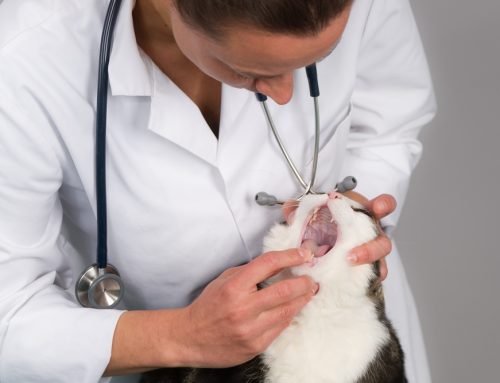
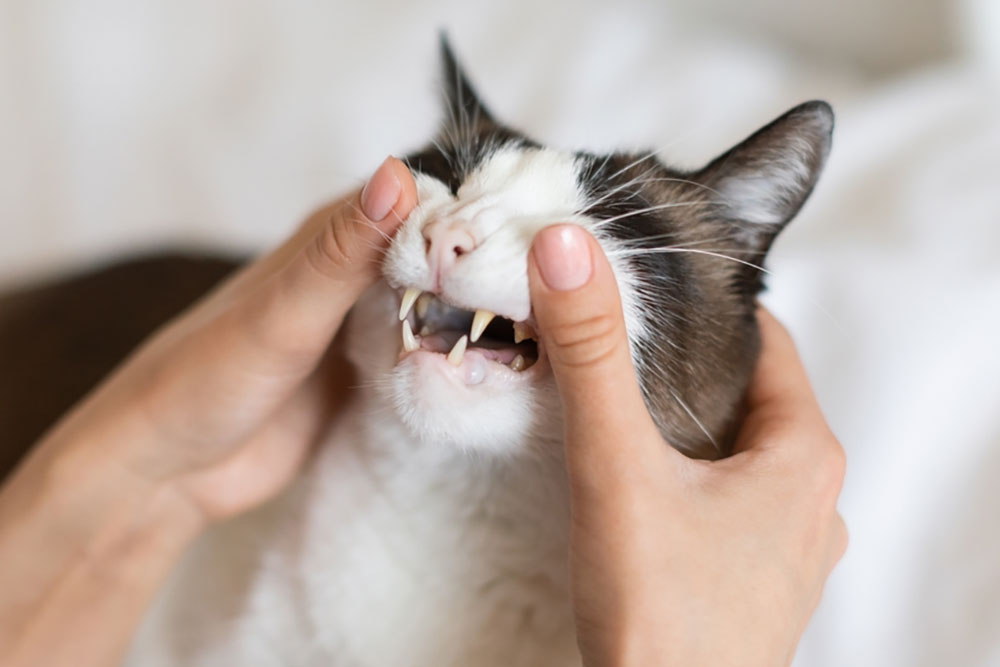
In cats with stomatitis, the oral mucosa is typically severely inflamed, ulcerated, and often actively bleeding even from minimal contact. The level of pain is usually significant enough that a thorough oral exam requires sedation or general anesthesia to be performed safely and completely. A conscious exam is simply not sufficient to evaluate every tooth surface, periodontal pocket, and soft tissue area accurately, and attempting one is uncomfortable for the cat and incomplete for the clinician.
Cats at our practice are housed in a dedicated, dog-free area with Feliway diffusers, hiding spots, and calming sounds. Anesthetic protocols are individualized for every patient, with a board-certified anesthesiologist available for high-risk patients. Our anesthesia approach is designed to make every procedure as safe and low-stress as possible.
Stomatitis vs. Periodontal Disease: Getting the Diagnosis Right
Many cats have both conditions simultaneously, which makes diagnosis more complex and reinforces why a complete workup matters from the start. Periodontal disease targets the structures supporting the teeth, including the gums, periodontal ligament, and bone, and produces inflammation localized around individual teeth. Stomatitis spreads to areas of the mouth with no direct contact with teeth at all. The treatment for each is different, and treating the wrong problem produces no lasting improvement.
Dental radiographs are essential for a complete picture, revealing retained root fragments, bone loss patterns, and tooth root integrity that visual examination cannot assess. Our digital imaging capabilities include full-mouth dental radiographs and Cone Beam Computed Tomography (CBCT), which provides three-dimensional imaging of teeth, roots, supporting bone, and surrounding soft tissue with less radiation than traditional CT and significantly less time under anesthesia.
When oral lesions appear unusual or are distributed asymmetrically, oral cavity tumors must be ruled out before proceeding. Oral tumors can look nearly identical to stomatitis in their presentation but require an entirely different treatment approach. Tissue biopsy is the appropriate next step whenever there is any concern, and it is part of how we ensure a stomatitis diagnosis is accurate before extraction planning begins.
What Does the Diagnostic Workup Involve?
A thorough workup before committing to a treatment plan includes several components:
- Full oral exam under anesthesia, with careful evaluation of all soft tissues and every tooth
- Full-mouth dental radiographs and CBCT imaging to assess root integrity and bone health
- Viral testing for FeLV and FIV, as well as calicivirus and herpesvirus
- Bloodwork to assess organ function and overall health prior to anesthesia
- Biopsy of any atypical lesions when an oral tumor is a consideration
Viral status directly shapes post-operative care and prognosis. Knowing whether a cat is a chronic calicivirus carrier, for example, influences what long-term management will look like after surgery. Cats with concurrent FeLV or FIV positivity require additional counseling about expected outcomes, as immunosuppression can complicate healing. Most diagnostic results return within 24 to 48 hours through our in-house lab and reference laboratory partnerships.
Treatment Options for Feline Stomatitis
Can Medication Alone Manage Stomatitis?
In the early stages or in rare cases where a very clean mouth can be consistently maintained, medical management has a role. Rarely, cats whose owners commit to anesthetized cleanings at regular intervals and daily brushing at home can manage the condition without extraction. For most cats, however, more aggressive intervention becomes necessary.
Anti-inflammatory medications, antibiotics, pain relief, and antiviral medications or supplements can reduce inflammation temporarily, and soft food helps cats with significant oral pain eat more comfortably. In severe cases where a cat cannot maintain adequate nutrition, a temporary feeding tube may be used to support the cat while a longer-term plan is developed.
The fundamental limitation is that medication does not address the root problem. As long as tooth surfaces are present, the immune system continues to react to them. Most cats on medical management alone experience progressive deterioration, requiring increasing medication doses with diminishing returns. Prolonged corticosteroid use also carries its own health risks, and extensive medical management prior to surgery has been associated with poorer post-operative outcomes. Medication is most valuable as a bridge to surgery or as supportive care, not as a permanent substitute.
Full-Mouth Extraction: The Most Effective Long-Term Treatment
Our current recommendation for cats with stomatitis is to extract the premolar and molar teeth, along with any other teeth that have significant disease present. When we recommend full-mouth tooth extraction, we do so because we have seen an excellent response in our patients. Sixty percent of cats with stomatitis who have had tooth extractions are cured of the condition. Another 20% are significantly improved and may need medications intermittently to manage flares. That means 80% of cats respond well when extraction is complete and performed before the disease has had years to progress.
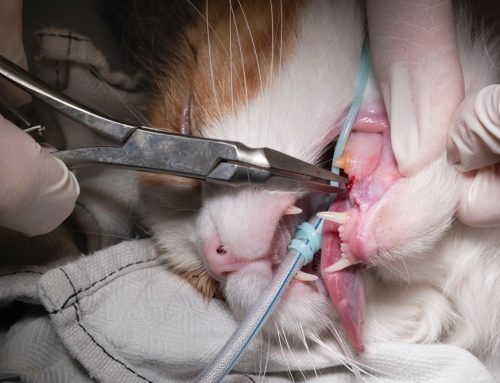
The critical qualifier is completeness. Even small retained root fragments can sustain the inflammatory response and prevent resolution. Post-extraction radiographs after every extraction are non-negotiable, confirming that no root material remains before a patient leaves our care. The anesthesia and dental procedures involved in a full-mouth extraction require careful patient preparation, individualized protocols, and continuous monitoring, all of which are standard components of every procedure here. Local nerve blocks provide intraoperative pain management, and therapeutic laser application to soft tissue after extractions reduces inflammation and supports healing.
Cats adapt to life without teeth with remarkable resilience. Most eat comfortably within weeks of healing, often with noticeably more enthusiasm than before, because they are no longer eating through constant pain. Owners are consistently surprised by how quickly a cat who was struggling at the food bowl pre-operatively resumes normal, relaxed eating behavior once the pain is gone. Visit our surgery day details for a full walkthrough of what to expect from drop-off through discharge.
Advanced Options for Cats Who Don’t Respond to Surgery
If a cat falls into the 20% who don’t improve significantly after extractions, there are still treatment options available. In refractory cases, we may use medications that reduce the immune response, including steroids or other immunosuppressants. We may also be able to use stem cell therapy to help achieve a pain-free mouth.
Specifically, adipose-derived mesenchymal stem cell therapy uses the cat’s own fat-derived stem cells to modulate the immune response rather than simply suppress it, and has shown meaningful results in cats who did not respond to extraction alone. MSC secretome, a cell-free injectable preparation of bioactive factors that stem cells naturally produce, is a newer option that is easier to standardize and store than live cell therapies. Cryotherapy, which uses extreme cold to treat affected oral tissue, can provide relief ranging from temporary comfort to more lasting resolution depending on the patient. We will work with you and your cat to find the best treatment options for the best quality of life.
What Does Recovery Look Like After Extraction?
The most common concern owners raise before agreeing to extraction is straightforward: how will my cat manage without teeth? The answer, almost universally, is remarkably well. Here is what to expect in the post-operative period:
- Prescription pain medication for several days to weeks following surgery
- Antibiotics to reduce the risk of infection at extraction sites
- Soft food during the healing period, typically two to four weeks
- Dissolvable sutures that close extraction sites without needing removal
- Follow-up visits to assess healing and confirm no retained root material
Nerve blocks administered during surgery provide pain control for 12 to 24 hours post-procedure, and the transition home is typically smoother than owners anticipate. Most cats begin showing real improvement within the first few weeks, with appetite and energy returning as pain resolves. Cats with calicivirus carrier status may need continued immunomodulatory therapy after surgery, and we discuss realistic timelines and revisit the management plan at each follow-up.
What Influences Long-Term Prognosis?
Early treatment consistently produces the best outcomes. Cats treated surgically before extensive mucosal changes have developed or before prolonged immunosuppression has been applied have the highest rates of complete resolution. Key factors that influence how well a cat responds:
- Duration of disease: longer disease history before surgery is associated with a less complete response
- Completeness of extraction: retained root fragments are a leading reason inflammation persists after an apparently complete procedure
- Viral status: active calicivirus carrier status may extend recovery and require ongoing management
- Individual immune response: some cats need long-term anti-inflammatory therapy even after successful extraction
Even cats who require ongoing medication after surgery typically experience a significant reduction in pain and inflammation, and most return to eating, grooming, and normal daily behavior.
Maintaining Oral Health in Cats Without Stomatitis
Dental health matters for every cat, including those who have never shown signs of stomatitis. Periodontal disease affects the majority of cats by age three and progresses silently until it is painful and well advanced. Consistent at-home care and professional cleanings are the best tools for preventing significant dental disease and catching early problems before they escalate.
For cats who tolerate it, regular brushing with an enzymatic toothpaste is the gold standard. For cats who do not, water additives, dental powders, dental wipes, and dental treats and bites are lower-stress alternatives that still provide meaningful benefit. Our dentistry services include professional dental cleanings with full-mouth radiographs, and our feline-focused environment is designed to make every visit as calm and stress-free as possible.
Frequently Asked Questions About Feline Stomatitis
Can stomatitis be managed with medication alone?
Rarely, and only in cats who can maintain a very clean mouth with regular anesthetized cleanings and consistent daily brushing at home. For most cats, medication reduces symptoms temporarily but does not produce lasting remission and becomes progressively less effective over time. Full-mouth extraction offers the strongest evidence for sustained improvement, especially when performed early.
Will my cat be able to eat without teeth?
Yes, and most cats eat significantly better than before once the pain is gone. Soft food is required during the healing period, but most cats return to eating comfortably within a few weeks and are noticeably more active and engaged post-operatively.
How long does recovery take?
Extraction sites typically heal over two to four weeks. The full inflammatory response may take longer to resolve completely, particularly in cats with viral involvement. Follow-up visits allow us to monitor healing and adjust the plan based on how each individual cat responds.
What if my cat still has inflammation after extraction?
Some cats, particularly those with confirmed calicivirus carrier status or a long history of medical management prior to surgery, need continued therapy afterward. Stem cell therapy and MSC secretome are showing real promise for these more complex cases, and we continue to work with each family to find the approach that offers the best quality of life.
Is stomatitis contagious to other cats?
The condition itself is not directly transmissible, but the viruses associated with it, including calicivirus and herpesvirus, can spread between cats. Viral testing helps owners understand the risk and manage multi-cat households appropriately.
Getting Your Cat the Help They Deserve
Watching a cat in oral pain is genuinely hard. It is especially difficult when the changes have been so gradual that you aren’t sure how long it has been going on, or whether what you are seeing is serious enough to warrant a specialist visit. It is. Cats with stomatitis who are treated early consistently do better than those who reach surgery after months or years of progressive inflammation.
Our practice is built specifically for this kind of care: advanced imaging, meticulous extraction technique with post-operative radiographic verification, and a full range of treatment options for cats who need more than extraction alone. Schedule a consultation to begin an evaluation, or review current timelines and costs to understand what to expect before booking. We’re here to help your cat get back to living and eating comfortably.