Breed-Specific Dental Problems: Why Some Dogs Need Extra Oral Care
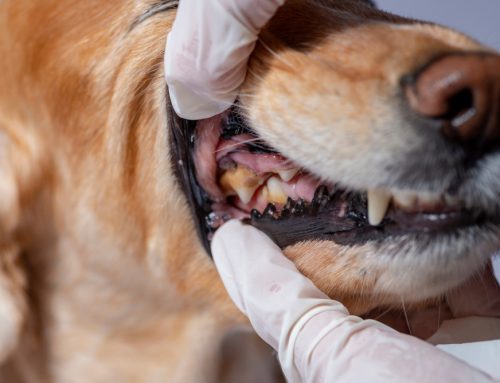
Unfortunately, some breeds are simply fighting an uphill battle when it comes to oral health. The compact jaws of breeds like Bulldogs often mean teeth that are too crowded together, while small dogs like Chihuahuas frequently face early tooth loss and serious gum disease. Understanding how your dog’s breed and jaw structure affect their dental health is the first step in preventing problems before they cause pain or infection. A commitment to regular dental exams and proactive, breed-specific care is essential for keeping your pet’s mouth healthy and comfortable.
At North Bay Veterinary Dentistry, our focus on advanced dental services means we can address even the most complex breed-related oral health challenges with precision and compassion. Whether your pet needs a professional cleaning, orthodontic correction, or specialized treatment for gum disease, our team provides expert care tailored to your dog’s unique needs.
Why Certain Breeds Are Prone to Dental Disease
The connection between a dog’s breed and their dental health is well documented in veterinary medicine. Skull shape and jaw structure directly influence how teeth are spaced, how they line up when the mouth closes, and how vulnerable they are to gum disease. Toy and flat-faced (brachycephalic) breeds including Chihuahuas, Yorkshire Terriers, Maltese, Pugs, and French Bulldogs have much higher rates of dental disease because their teeth are crowded into smaller jaws with less space between them. Dental disease in small breed dogs often starts by two to three years of age and progresses quickly without professional care.
Long-nosed breeds like Greyhounds, Collies, and Borzois face different challenges related to their elongated narrow jaws, which can lead to gum recession and exposed tooth roots. Large-breed dogs including Labrador Retrievers and American Pit Bull Terriers often develop worn-down teeth, cracked molars, and exposed tooth pulp from aggressive chewing on hard objects or during work activities.
The genetic component of dental disease is significant. Inherited factors control how tooth enamel forms, how the immune system responds to mouth bacteria, and how teeth and jaws develop. Recognizing these breed-specific vulnerabilities allows us to create targeted prevention plans and catch problems early.
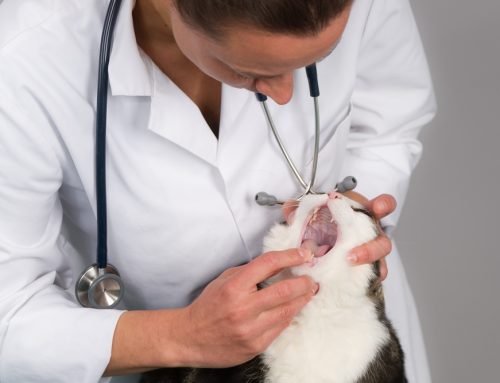
Our practice prioritizes thorough oral evaluations supported by advanced imaging and personalized treatment plans designed to address your dog’s specific breed-related risks.
Genetic and Structural Dental Conditions
Retained Baby Teeth and Crowded Mouths
Persistent baby teeth (also called retained deciduous teeth) are a common problem in toy and small-breed dogs. When baby teeth don’t fall out on their own as they should (typically by six to seven months of age), the adult teeth come in right alongside them. This creates severe crowding and pushes permanent teeth into abnormal positions, which creates the perfect environment for infection and pain. Deciduous canine tooth removal should be performed promptly to prevent bite problems and long-term orthodontic complications.
Toy breed dental problems go beyond just retained baby teeth. These breeds naturally have less supporting bone around their teeth, thinner tooth enamel, and weaker gum attachments. Even a small amount of tartar can lead to significant gum disease and bone loss. Dental challenges in small dogs often involve anatomical limitations that create hidden pockets where bacteria thrive, even with good home care.
Breeds including Maltese, Yorkshire Terriers, Toy Poodles, and Pomeranians typically need professional dental cleanings every six to twelve months, along with daily home care and dental X-rays to monitor for early bone loss.
Bite Alignment Problems (Malocclusion)
Malocclusion and tooth malposition refer to a range of bite problems where teeth don’t line up properly when the mouth closes. This includes overbites (where the upper jaw extends too far forward), underbites (where the lower jaw extends too far forward), and individual teeth that grow in twisted or displaced positions. These conditions don’t just affect appearance. They cause soft tissue injuries, abnormal pressure on teeth, and accelerated tooth wear.
Flat-faced breeds like Boxers, Bulldogs, Shih Tzus, and Boston Terriers commonly have underbites with lower canine teeth that point inward and repeatedly stab the roof of the mouth. Long-nosed breeds such as Collies and Dachshunds may have overbites with upper canine teeth that dig into the lower gums or palate.
Our orthodontic services address these problems through early intervention techniques, selective tooth extractions, crown reduction with root canal therapy, and custom orthodontic appliances including inclined planes and elastic chain devices. Early treatment (ideally while the puppy still has some baby teeth) prevents permanent soft tissue damage and preserves normal mouth function.
Amelogenesis Imperfecta (Genetic Enamel Defect)
Amelogenesis imperfecta (AI) is a hereditary condition where tooth enamel doesn’t form correctly during development. Affected teeth have abnormal, discolored, and fragile enamel that wears down rapidly, fractures easily, and can expose the sensitive inner tooth structure (pulp). Breeds known to be at higher risk for AI include Akitas, Samoyeds, Standard Poodles, and Italian Greyhounds.
Treatment for AI focuses on protecting remaining tooth structure through bonding materials or crown placement for functional teeth, removing severely affected teeth that cannot be saved, and maintaining aggressive home care to prevent gum disease on top of the enamel defect. Regular dental X-rays are critical because these patients frequently develop infections at the tooth roots.
Gum Overgrowth (Gingival Hyperplasia)
Gingival enlargement affects certain breeds more than others, including Boxers, Collies, Doberman Pinschers, Great Danes, and Dalmatians. This condition, which can be hereditary or caused by certain medications (like cyclosporine or calcium channel blockers), results in excessive gum tissue growth that covers the teeth, creates false pockets where bacteria hide, and traps plaque and debris.
Chronic gum overgrowth leads to secondary gum disease, bad breath, and oral discomfort. Severe cases require surgical treatment to remove the excess tissue. Our periodontal care includes deep cleaning below the gumline, root planing to smooth tooth surfaces, and antibiotic therapy when needed. For advanced overgrowth, we perform gingivectomy and gingivoplasty to surgically reshape the gum tissue and restore normal contours.
After surgery, management includes antimicrobial medications, chlorhexidine mouth rinses, and detailed home care instructions to help prevent the tissue from growing back.
Cleft Palate and Other Birth Defects
Cleft palate is a birth defect where the roof of the mouth doesn’t close completely during development before birth. This condition occurs more frequently in flat-faced breeds including Bulldogs, Boston Terriers, Pugs, Pekingese, and Shih Tzus. The opening can involve the front part of the mouth (lip and front of the palate), the back part (hard and soft palate), or both.
Surgery to repair the defect depends on how severe it is and how stable the puppy is, typically performed between three and six months of age. Successful repair requires careful tissue handling, closure without tension on the tissues, and proper nutritional support during healing.
Beyond cleft defects, flat-faced breeds often have crowded upper teeth that repeatedly injure the palate or tongue. Our digital imaging capabilities including Cone Beam CT (CBCT) and full-mouth dental X-rays allow us to see these complex structures in three-dimensional detail, which helps us plan surgery accurately.
Canine Chronic Ulcerative Paradental Stomatitis (CUPS)
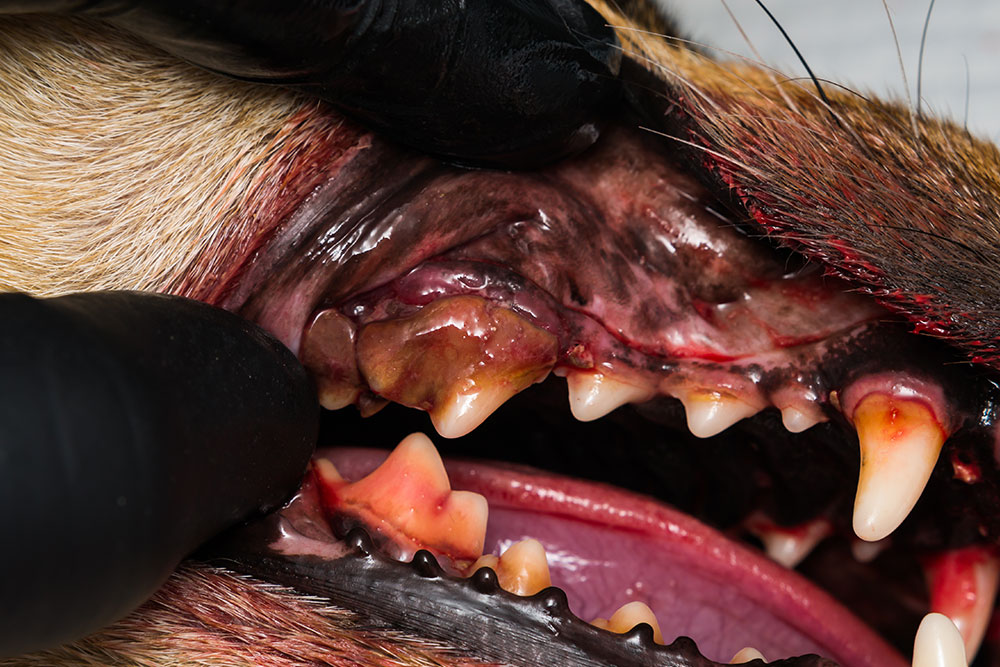
Chronic ulcerative paradental stomatitis, commonly called CUPS, is an immune-mediated oral disease where the immune system overreacts to normal mouth bacteria. This causes severe ulceration and inflammation where the gums meet the cheek tissue, particularly in the area touching the large upper back teeth (the fourth premolar and first molar). Instead of a normal immune response to plaque bacteria, affected dogs develop an exaggerated inflammatory reaction.
Certain breeds are much more likely to develop CUPS, including Maltese, Cavalier King Charles Spaniels, Cocker Spaniels, and Greyhounds. Dogs with CUPS typically have very bad breath, obvious oral pain, difficulty picking up food, and characteristic “kissing lesions” where inflamed cheek tissue contacts plaque-covered teeth, creating matching ulcers on both sides.
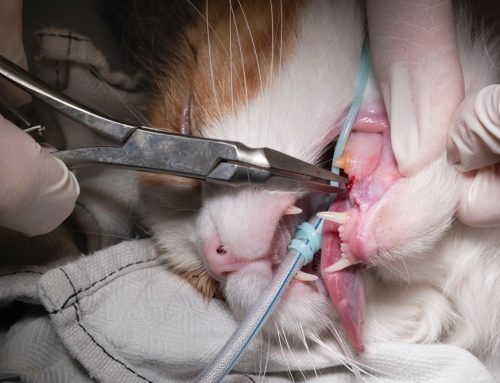
Treatment focuses on complete removal of all plaque and tartar through professional scaling and polishing under general anesthesia, followed by extraction of teeth with bone loss or involvement of the tooth roots. In some cases, we may remove the visible crown of strategic teeth while leaving the roots in place. After treatment, dogs typically need antibiotics, immune-suppressing medications (like cyclosporine or azathioprine), and rigorous daily home care.
Our stomatitis services provide comprehensive diagnostic workup and staged treatment plans tailored to how severe the disease is. Long-term success depends heavily on owner commitment to home care and regular professional maintenance visits.
Oral Cancer and Breed Risk
Recent research published in the Journal of the American Veterinary Medical Association shows that certain breeds have significantly higher risk for oral cancers. Golden Retrievers, Labrador Retrievers, and Australian Shepherds are particularly predisposed to oral malignant melanoma, oral squamous cell carcinoma, and fibrosarcoma.
Oral malignant melanoma is the most common oral cancer in dogs and typically affects the gums, cheek tissue, or roof of the mouth in older dogs. These tumors are locally invasive (they destroy surrounding tissue) and have high potential to spread to the lymph nodes and lungs.
Oral squamous cell carcinoma most frequently involves the tonsils, tongue, and gums. While it spreads to other parts of the body less often than melanoma, these tumors are locally aggressive and cause significant problems by invading bone and destroying tissue.
Fibrosarcomas arise from connective tissue and appear as firm, ulcerated masses with infiltrative growth patterns (they spread into surrounding structures like tree roots).
Increased vigilance is critical in at-risk breeds. Any persistent oral mass, ulceration, bleeding, facial swelling, or unexplained loose teeth warrants immediate evaluation including biopsy, chest X-rays to check for spread, and CT imaging. Early diagnosis and aggressive treatment combining surgery, radiation therapy, and immunotherapy offer the best chance for a good outcome.
Protecting Your Dog’s Oral Health Through Specialized Care
Breed-specific dental disease represents a significant challenge that requires specialized knowledge, advanced diagnostic technology, and personalized treatment planning. Early recognition of genetic predispositions, proactive preventive care, and timely intervention can dramatically improve your dog’s comfort and quality of life.
At North Bay Veterinary Dentistry, every patient benefits from our commitment to evidence-based dentistry, cutting-edge technology, and compassionate specialized care. From routine cleanings to complex oral surgery and management of immune-mediated oral disease, we provide the expertise necessary to preserve your dog’s oral health throughout their lifetime.
To schedule an evaluation or discuss your pet’s dental needs, contact our team today. Together, we’ll ensure your dog receives the highest standard of veterinary dental care.