
Advanced Endodontic Treatment
We get to the root of the problem.
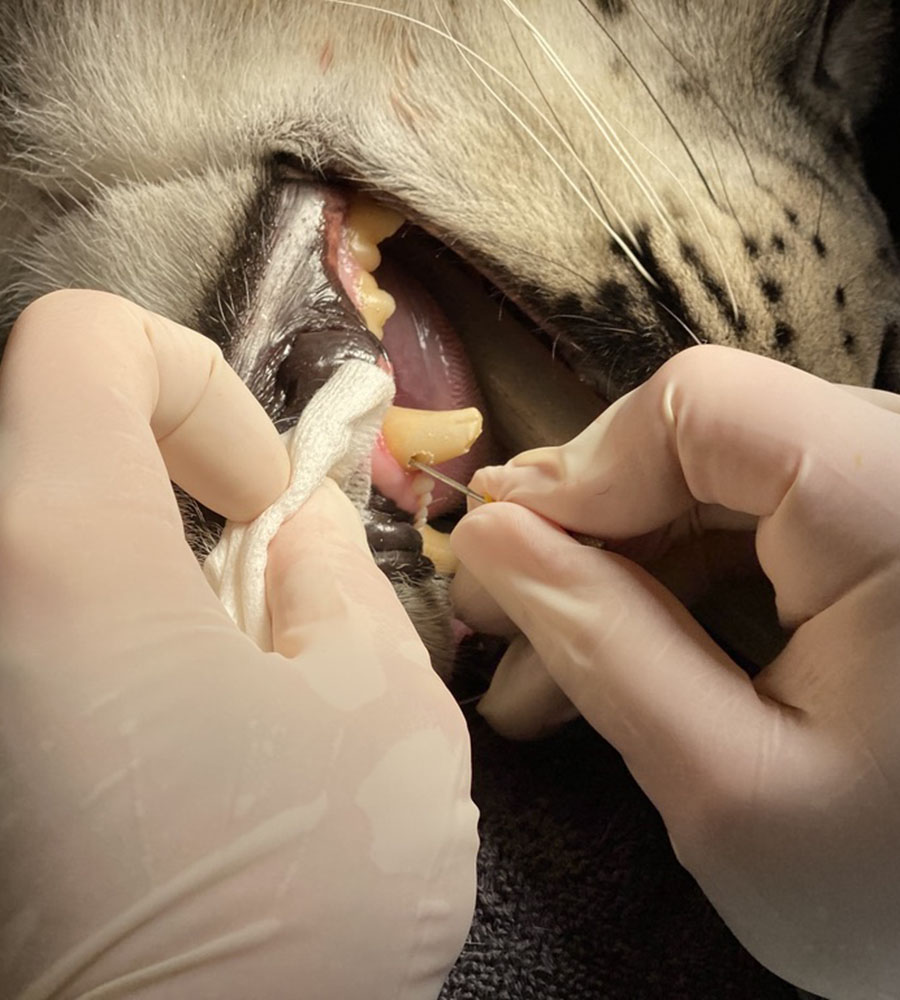
Endodontics
Endodontics refers to the treatment of the root canal of a tooth. The root canal is the central portion of the root of a tooth, where the nerves and blood vessels are present. The soft tissue in the middle of the tooth is called the pulp. There can be many reasons why a dog or cat would need a root canal. The most common reason is when a tooth breaks and exposes the pulp. Cavities are very rare in cats and dogs and so are unlikely to be the culprits causing the need for root canal therapy.
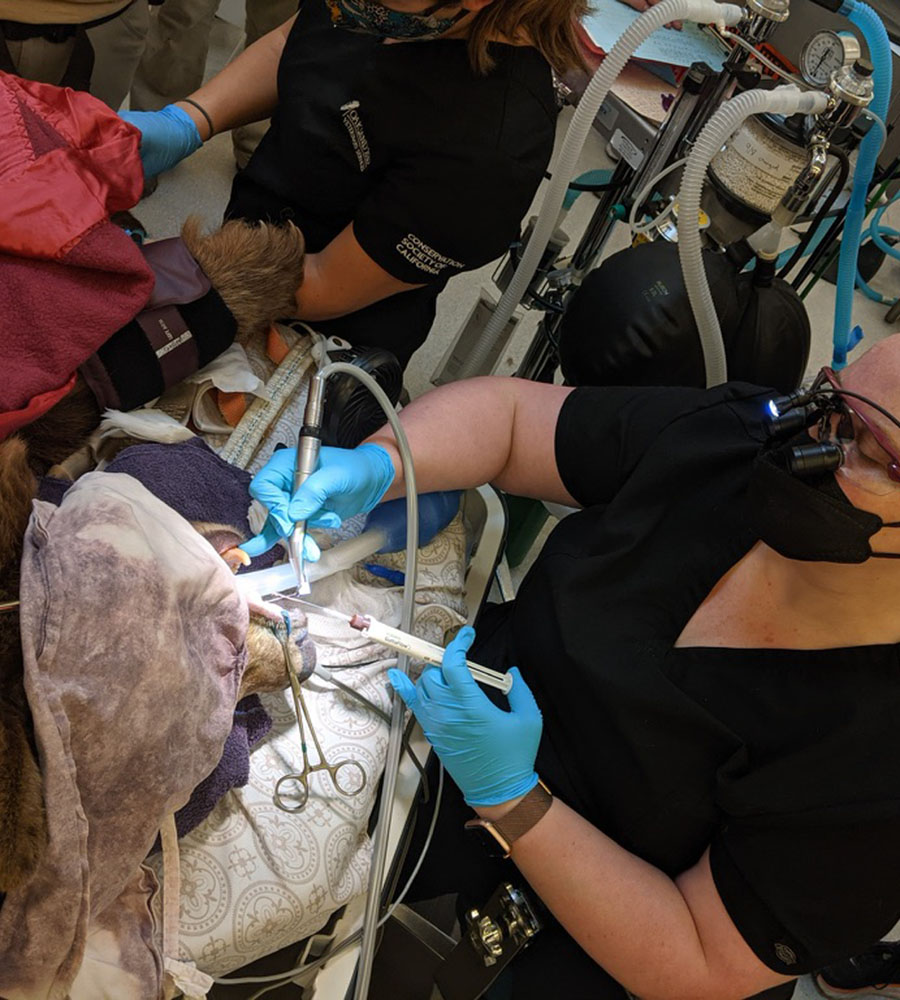
Evaluation Consultation
If your pet has been diagnosed as needing root canal therapy, we will schedule an initial evaluation consultation and talk with you about the pros and cons of the different treatment options that may be available. Root canal treatment is a non-invasive procedure that allows dogs and cats to continue using the problem tooth with minimal chance of future pain and infection. We will walk you through the specific recommendations for your pet after we have done an evaluation and reviewed previous records.
A root canal treatment has 4 steps:
- Access
- Cleaning
- Filling
- Restoring


Cleaning: Root canal therapy involves fully removing any of the pulp (the vital tissues) from inside the pulp chamber. Files are introduced into the canal and used to remove the pulp and other debris until the entire chamber is clean. The canal is flushed throughout the cleaning process with disinfectant solutions and sterile water.
Filling: To prevent future infection, the pulp chamber is filled with an inert material that acts like a plug to keep the inside of the tooth separated from the bone around the tooth root. This material appears white on x-rays.
Restoring: The cherry on top! In dogs and cats, the tooth is restored to its normal surface (minus any of the crown that has broken off) by using composite materials that harden so it can withstand chewing and biting. This material, similar to what is used for filling cavities in humans, protects the work that was done on the pulp chamber.


